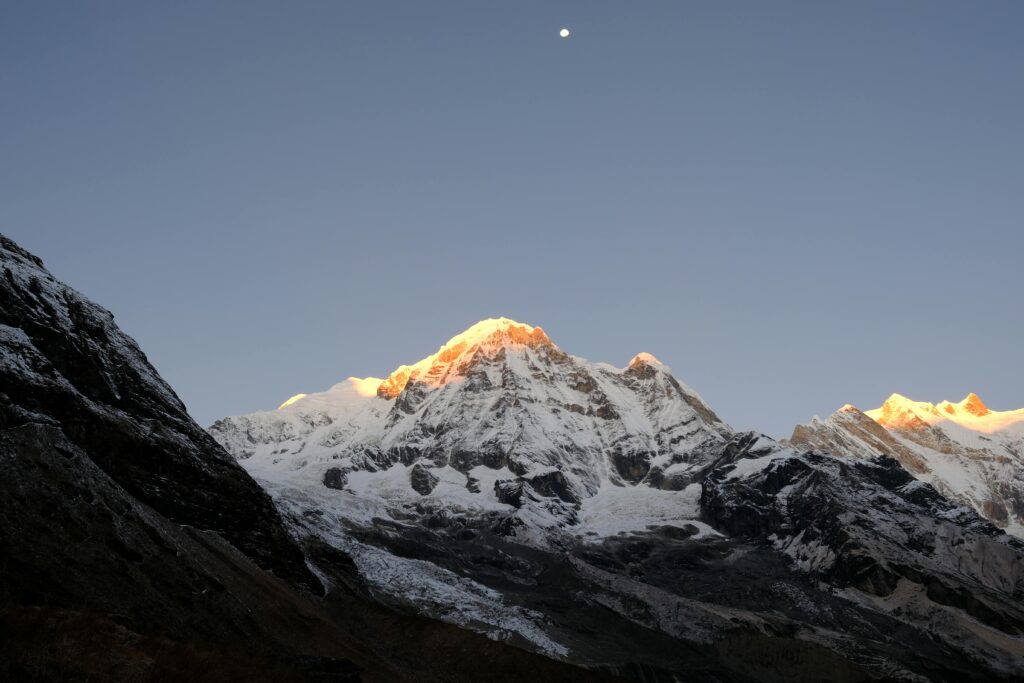
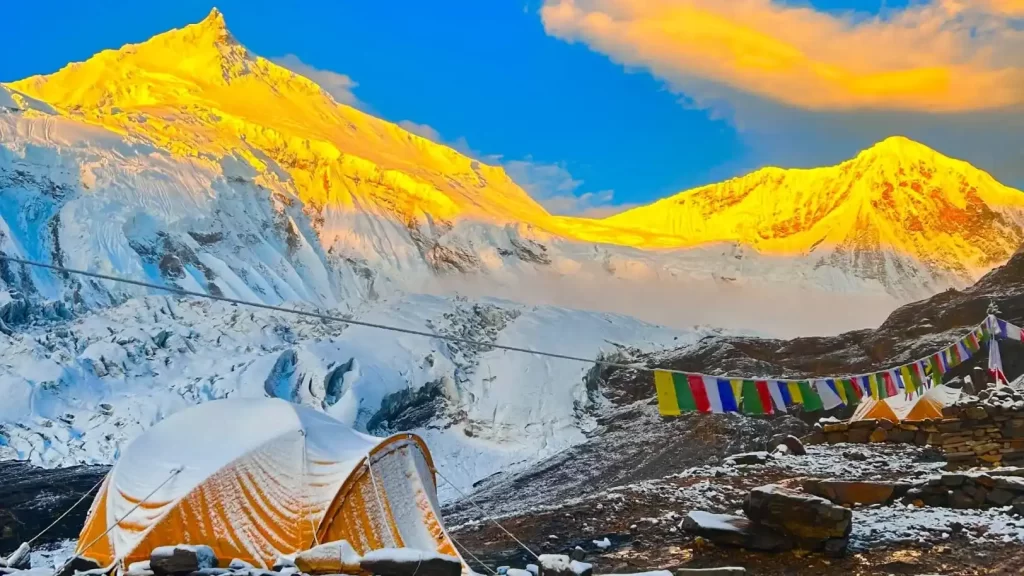
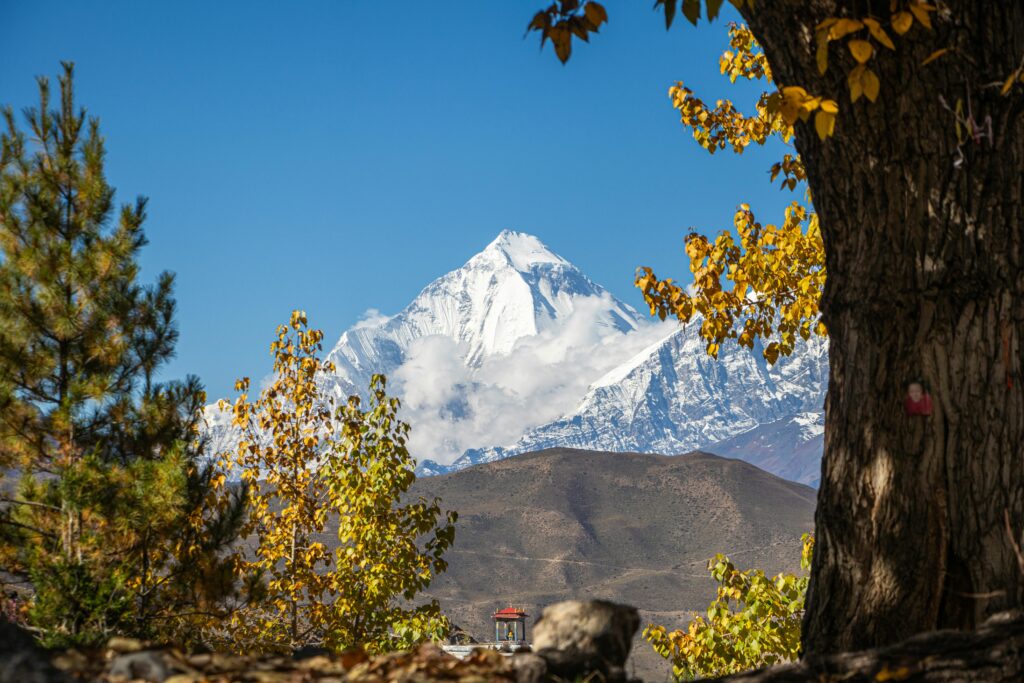
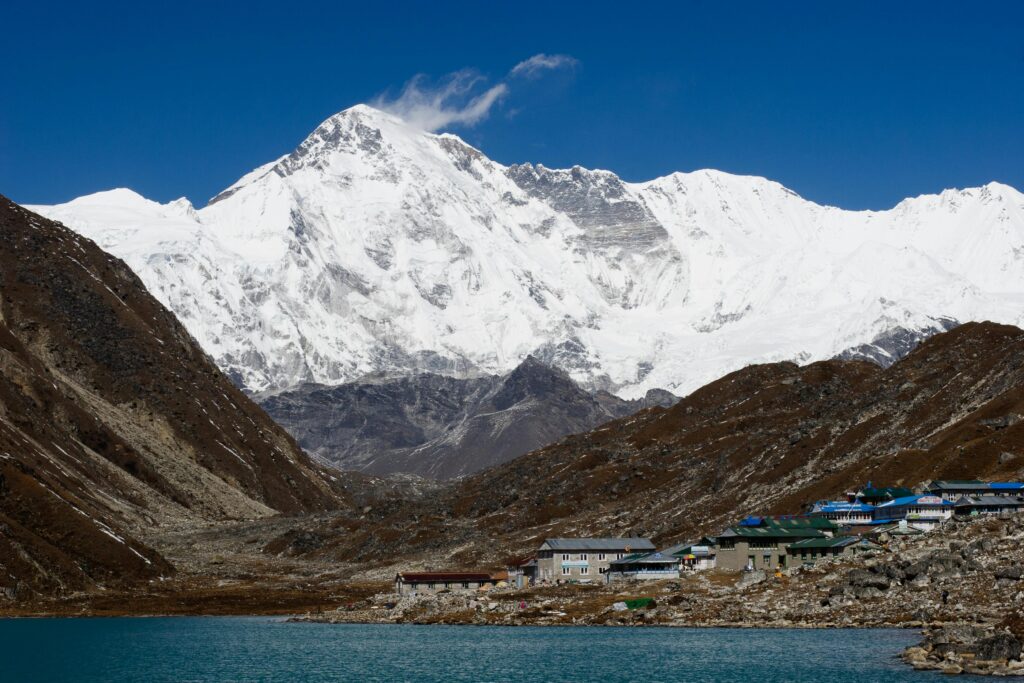
Experience the Lhotse Expedition (8,516 m) with Royal Orchid Treks & Expedition — a remarkable journey to the fourth-highest mountain in the world. Rising directly beside Mount Everest and forming part of the same majestic massif, Lhotse is known for its dramatic walls, steep ice sections, and technical climbing that reward experienced mountaineers seeking a true Himalayan challenge.
This expedition follows the classic South Col Route, sharing the legendary approach with Everest through the Khumbu Icefall, Western Cwm, and up the Lhotse Face to Camp III. From here, the route turns toward the narrow Lhotse Couloir, a steep gully of hard ice and mixed rock that demands steady focus, strong rope skills, and high-altitude stamina. First climbed in 1956 by Swiss climbers Fritz Luchsinger and Ernst Reiss, Lhotse’s towering South Face — rising more than 3,200 meters almost vertically — remains one of the most awe-inspiring faces in the Himalayas.
Designed for climbers with previous experience above 7,000 meters, the Lhotse Expedition offers a beautiful balance of technical ascent, alpine isolation, and breathtaking Himalayan scenery. With Royal Orchid’s small team approach, expert Sherpa guides, and decades of high-altitude experience, you’ll receive the support, safety, and careful planning needed for a confident and successful ascent. From warm hospitality at Base Camp to steady guidance on the mountain, your journey blends adventure, precision, and Sherpa heritage at every step.
Route Highlights – Lhotse Expedition (South Col Route)
Base Camp (5,364 m / 17,598 ft)
Your Himalayan home sits beneath the towering walls of Lhotse, Nuptse, and Pumori. Base Camp offers warm dining tents, communication facilities, nutritious meals, and a dedicated Sherpa support team. The expedition begins with a traditional Puja ceremony, seeking blessings for safety and success.
Camp I (≈6,050 m) – Khumbu Icefall Exit
Reaching Camp I requires navigating the constantly shifting Khumbu Icefall, using fixed ropes and ladders to cross crevasses and seracs. Camp I rests at the top of the Icefall, at the gateway to the Western Cwm. Climbers usually spend their first acclimatization nights here.
Camp II (≈6,400–6,500 m) – Western Cwm
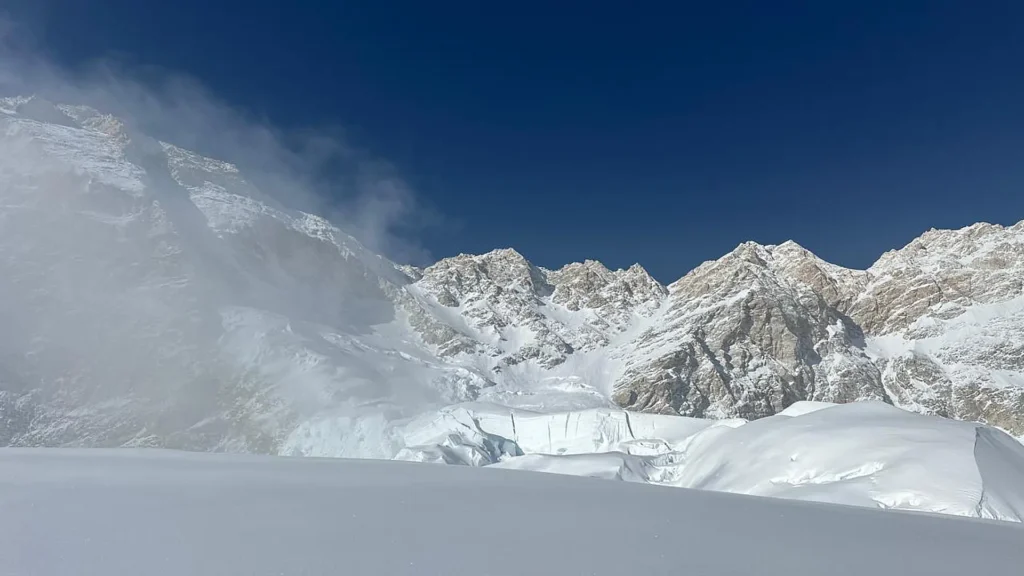
Camp II is positioned deep inside the vast, sunlit Western Cwm, surrounded by immense walls of Everest, Lhotse, and Nuptse. This is the main acclimatization and operations camp, offering stability, warmth during the day, and excellent mountain views. Most teams spend extended periods here to prepare for higher camps.
Camp III (≈7,100 m) – Mid-Lhotse Face
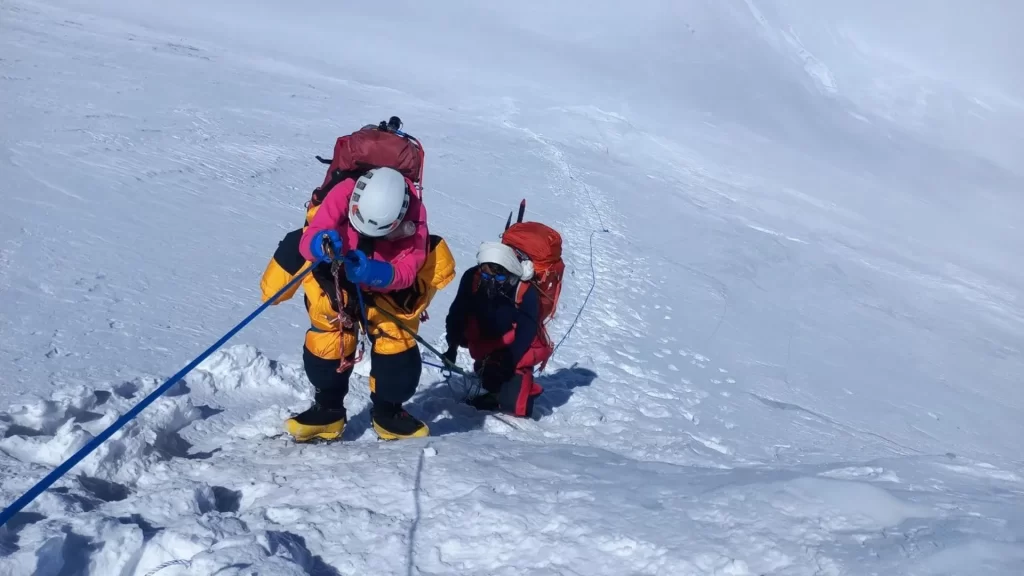
Fixed ropes lead climbers up the steep, hard blue ice of the Lhotse Face, where angles vary from 30–50 degrees. Camp III is perched on a safely leveled platform cut into the ice. The air is thin, the climb demanding, and every movement requires precision. This camp completes your major acclimatization cycle.
Summit Route via the Lhotse Couloir (8,516 m)
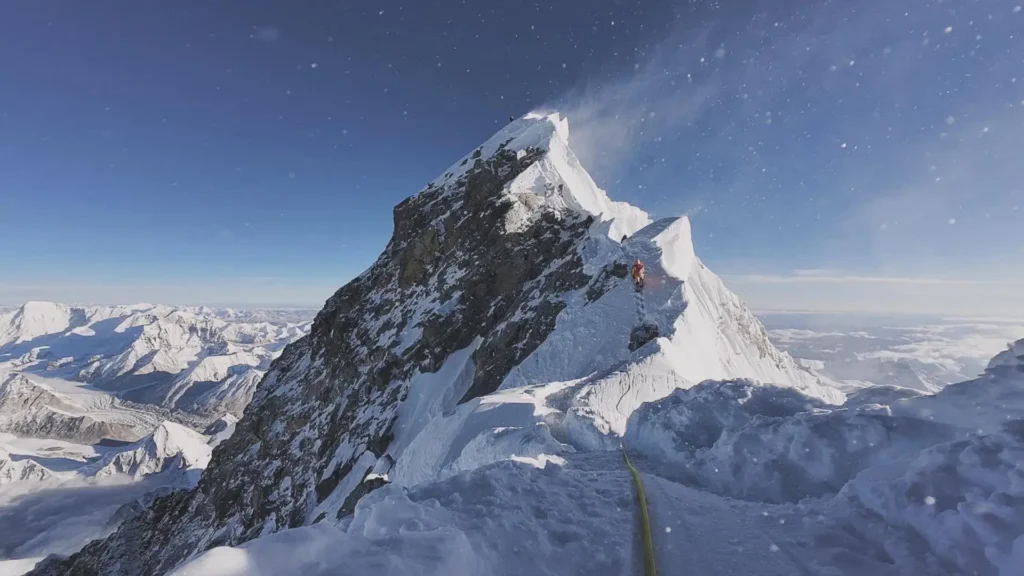
Instead of continuing toward Everest’s South Col, climbers traverse right toward the iconic Lhotse Couloir. This narrow, steep gully of ice and mixed rock is the key to reaching the summit. The final push requires strong rope handling, good footwork, and steady teamwork. The summit offers stunning views of Everest’s South Face, the Makalu massif, and the remote eastern Himalayas
Arrive in Kathmandu, where our team welcomes you and transfers you to your hotel. Take the day to rest and settle in after your long journey. Accommodation: Hotel
Day 2 – Expedition Briefing & Preparation
Attend your official briefing, finalize documentation, and complete equipment checks with your Sherpa climbing team. Meals: B/D | Accommodation: Hotel
Day 3 – Fly to Lukla (2,840 m), Trek to Phakding (2,610 m)
Take one of the world’s most scenic mountain flights to Lukla. Begin your trek along the Dudh Koshi River, passing prayer wheels, pine forests, and small Sherpa settlements before reaching Phakding. Meals: B/L/D | Accommodation: Lodge
Day 4 – Trek Phakding to Namche Bazaar (3,440 m)
Cross suspension bridges and enter Sagarmatha National Park. A gradual but steady climb brings you to Namche Bazaar, the heart of Sherpa culture and trade. Meals: B/L/D | Accommodation: Lodge
Day 5 – Acclimatization Day in Namche Bazaar
Enjoy a light acclimatization hike to the Everest View Hotel or Khumjung village. Spend the afternoon resting, exploring local shops, or enjoying cafés in Namche. Meals: B/L/D | Accommodation: Lodge
Day 6 – Trek Namche to Pangboche (3,985 m)
Follow a panoramic trail overlooking Everest, Lhotse, and Ama Dablam. After a scenic traverse through rhododendron forests and teahouses, continue past Tengboche Monastery before descending to Pangboche — one of the oldest Sherpa villages in the region, known for its ancient monastery and beautiful high-mountain scenery. Meals: B/L/D | Accommodation: Lodge
Day 7 – Trek Pangboche to Dingboche (4,410 m)
Ascend steadily above the tree line into wide, open alpine terrain. Enjoy spectacular views of Ama Dablam’s dramatic ridges before reaching the windswept farming village of Dingboche. Meals: B/L/D | Accommodation: Lodge
Day 8 – Acclimatization in Dingboche
Take an optional acclimatization hike to Nangkartsang Peak for breathtaking views of Makalu, Lhotse, and Cho Oyu. Return to Dingboche for rest. Meals: B/L/D | Accommodation: Lodge
Day 9 – Trek Dingboche to Lobuche (4,940 m)
Climb through Dughla Pass, where memorials honor climbers lost on Everest and Lhotse. Continue along the glacial moraine toward Lobuche, surrounded by towering peaks. Meals: B/L/D | Accommodation: Lodge
Day 10 – Trek Lobuche to Lhotse Base Camp (5,364 m)
Follow the Khumbu Glacier toward the shared Everest–Lhotse Base Camp. Settle into your expedition tent and meet your full Sherpa team. Meals: B/L/D | Accommodation: Tent
Days 11–15 – Base Camp Training & Puja Ceremony
Spend several days adjusting to the altitude, practicing fixed-rope techniques, and reviewing safety procedures. A traditional Sherpa Puja ceremony is held to bless the expedition and ensure safe passage through the mountains. Meals: Full Board | Accommodation: Tent
Days 16–37 – Acclimatization Rotations (Camps I–III)
Begin your rotation cycles to gradually gain altitude and build endurance:
Camp I (~6,050 m):
Reached through the Khumbu Icefall — ladders, crevasses, and icy blocks define this section.
Camp II (~6,400–6,500 m):
Located in the Western Cwm, warm during the day and a key acclimatization camp.
Camp III (~7,100 m):
A steep climb up the Lhotse Face, requiring careful footwork on fixed ropes.
Each rotation ends with a return to Base Camp for recovery and nourishment. Meals: Full Board | Accommodation: Tent
Days 38–49 – Summit Push (Base Camp → Summit → Base Camp)
When weather stabilizes, begin your final ascent:
Climb through Camps I and II
Ascend the steep Lhotse Face to Camp III
Enter the narrow, technical Lhotse Couloir — the crux
Push for the summit of Lhotse (8,516 m), the world’s 4th-highest mountain
After a successful summit, descend carefully back to Base Camp for rest and celebration.
Meals: Full Board | Accommodation: Tent
Day 50 – Trek Base Camp to Pheriche (4,371 m)
Descend through the Khumbu Valley, enjoying richer air and a more relaxed pace. Meals: B/L/D | Accommodation: Lodge
Day 51 – Trek Pheriche to Namche Bazaar
Return to Namche, where you can enjoy hot showers, bakeries, and vibrant Sherpa hospitality. Meals: B/L/D | Accommodation: Lodge
Day 52 – Trek Namche to Lukla
Retrace your route along the Dudh Koshi River, arriving in Lukla for your final night in the Khumbu. Meals: B/L/D | Accommodation: Lodge
Day 53 – Fly Lukla to Kathmandu
Morning flight back to Kathmandu. Relax, explore the city, or enjoy a celebratory dinner. Meals: Breakfast | Accommodation: Hotel
Day 54 – Leisure Day in Kathmandu
A free day for sightseeing, shopping, or well-earned rest before departure. Meals: Breakfast | Accommodation: Hotel
Day 55 – Final Departure
Transfer to Tribhuvan International Airport for your onward flight. Meals: Breakfast
Why Royal Orchid Trek for Lhotse Expedition – South Col Route
1. Expert Sherpa Team With Lhotse-Specific Experience
Lhotse is more technical than Everest, especially in the Couloir. Our Sherpa climbers have extensive Lhotse experience, ensuring confident guidance through steep ice sections, fixed lines, and high-exposure terrain.
2. Small, Focused Climbing Groups
We keep our Lhotse teams intentionally small to prioritize safety, precision on technical terrain, and personalized support. This allows us to move efficiently and maintain strong communication on the mountain.
3. Strong Acclimatization & Safety Strategy
Our plan includes proven rotation schedules, oxygen support (if needed), high-altitude medical protocols, and real-time weather assessments. Your safety is our first priority from Base Camp to summit.
4. Seamless Expedition Logistics
From high-quality tents to Lhotse-specific climbing gear, rope fixing, communication systems, and nutrient-rich meals, every detail is managed to keep you strong on the mountain.
5. Rooted in Sherpa Culture & Respect for the Mountains
We honor Himalayan traditions through our Puja ceremony, ethical climbing practices, fair treatment of all staff, and a deep respect for the spiritual significance of these peaks.
6. Ideal Choice for Climbers Moving From 7,000m to Their First Technical 8,000m Peak
Lhotse offers a perfect progression for experienced high-altitude climbers seeking a technical challenge without the massive crowds of Everest. Our approach supports you step-by-step in this transition.
Include & Excludes
Include
4 nights’ hotel in Kathmandu with breakfast
All domestic flights and transfers (Kathmandu ↔ Lukla)
All necessary permits: Lhotse Expedition Royalty, Sagarmatha National Park, SPCC Icefall Fee, local municipality entry
Three meals a day (breakfast, lunch, dinner) with tea and coffee during trek and climb
Full Base Camp setup with personal tent, dining, kitchen, shower & toilet tents
Shared high-altitude tents at Camps I–IV
1 professional Climbing Sherpa per climber
Porters/yaks for luggage and equipment transport
Sleeping bag, mattress, and essential camping gear
Oxygen cylinders with regulator and backups
Fixed ropes, carabiners, and climbing hardware
Insurance for all Nepalese staff and porters
Liaison officer, cooks, and support staff
Regular weather forecasts and base camp communications
Official summit certificate and souvenir from Royal Orchid Treks & Expedition
Exclude
International airfare to/from Nepal
Nepal visa fees
Travel and mountaineering insurance (mandatory)
Personal climbing gear and electronics
Personal expenses (laundry, drinks, snacks, souvenirs, Wi-Fi)
Emergency evacuation or early descent
Summit bonuses and staff tips
Alcoholic drinks and bottled beverages
Entrance fees for temples or cultural sites
Extra hotel nights in Kathmandu (early arrival, delay, or flight cancellation)