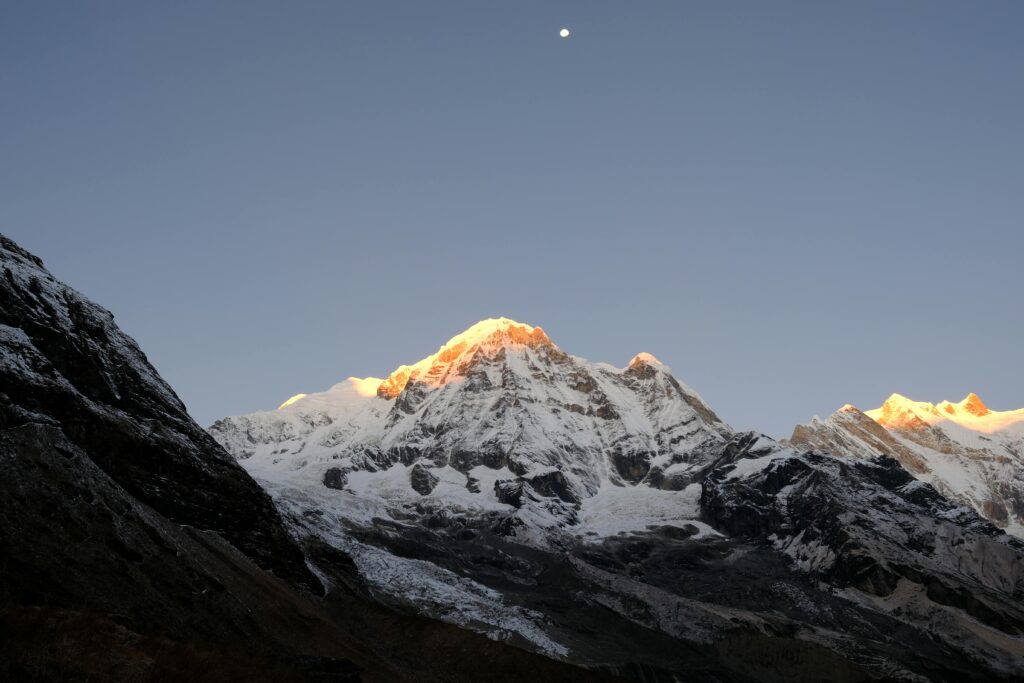
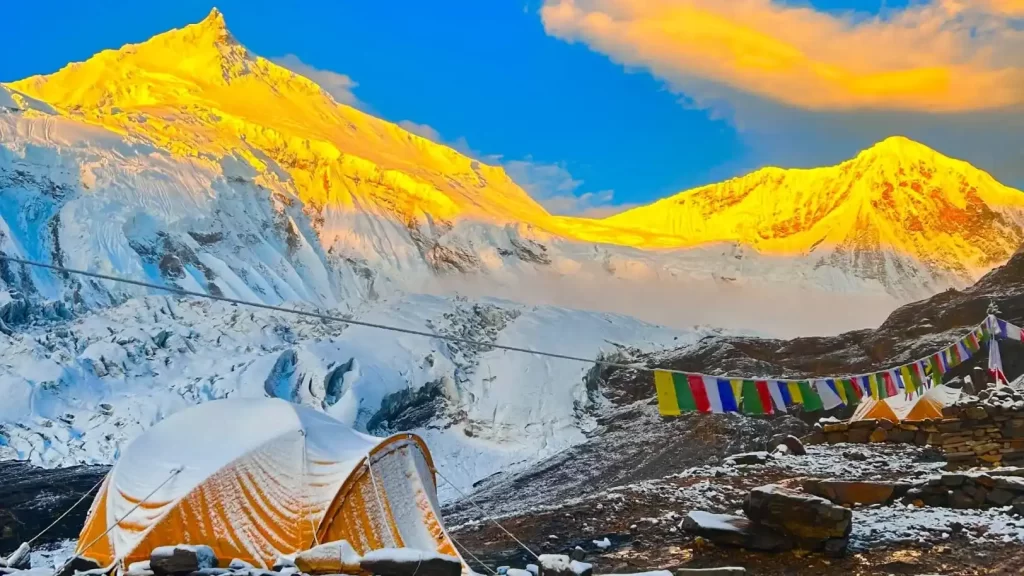
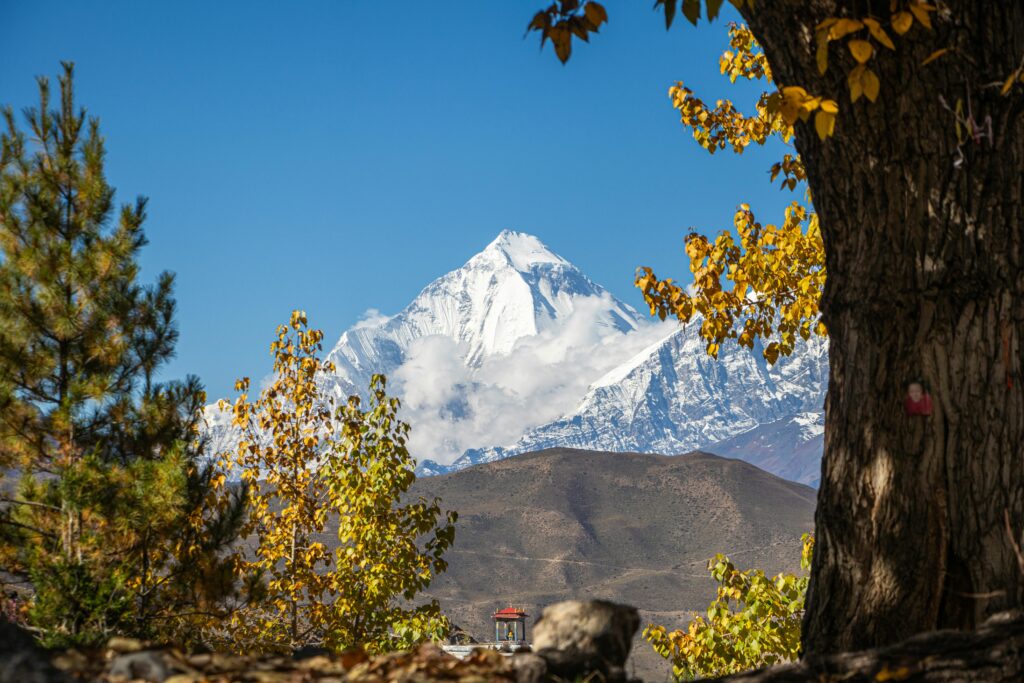
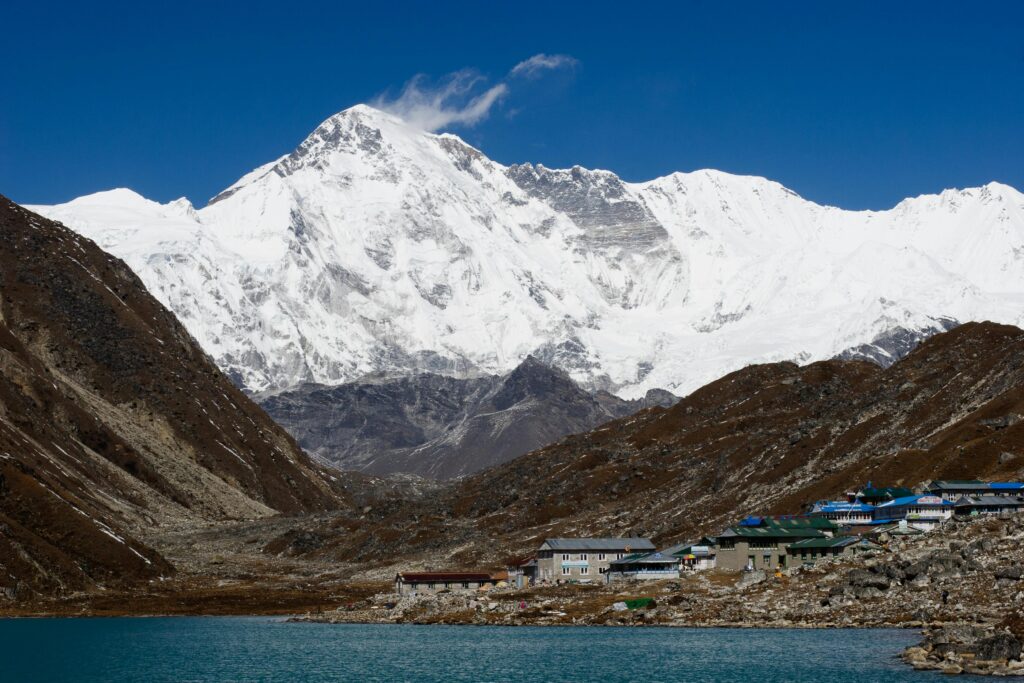
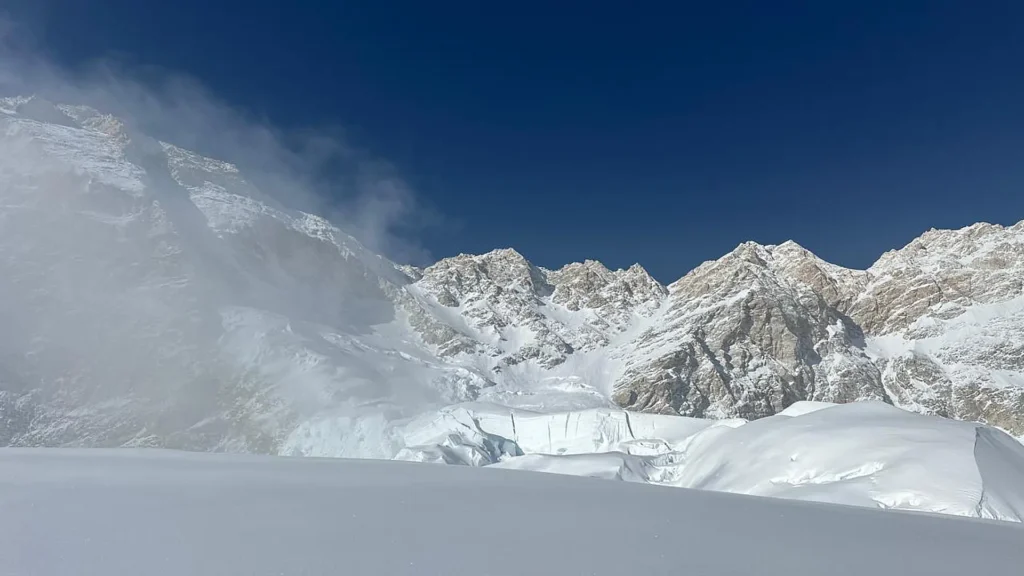
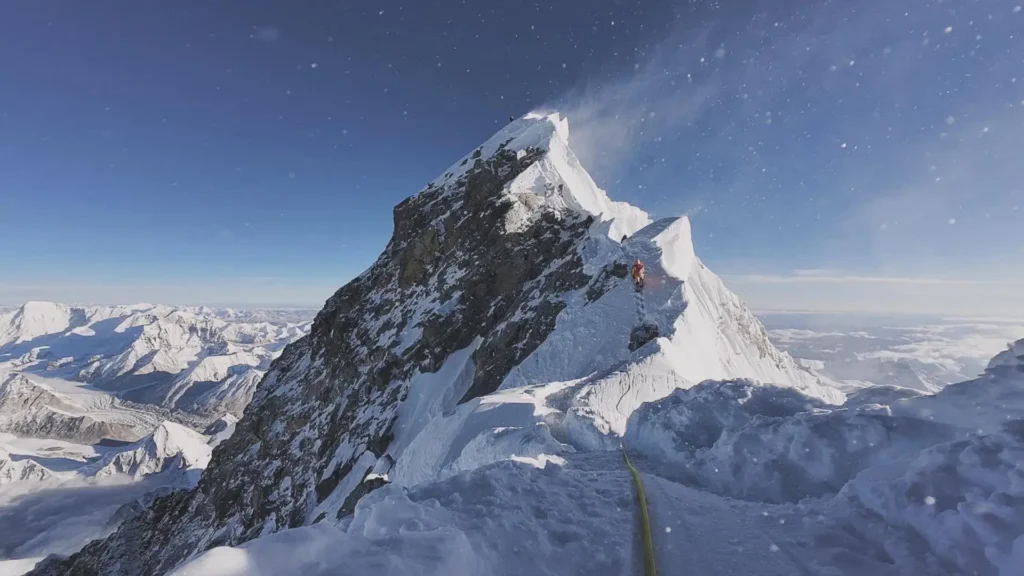
Join Royal Orchid Treks & Expedition on a journey to Mount Makalu (8,485 m) — the fifth-highest peak in the world and one of the most striking giants of the Himalayas. Standing just 19 km southeast of Everest, Makalu rises sharply from the Nepal–China border in a perfect four-sided pyramid, offering a dramatic and unforgettable sight for mountaineers.
Your expedition leads through the untouched wilderness of the Barun Valley, one of Nepal’s most pristine and biologically rich regions. Here, towering cliffs, cascading waterfalls, deep gorges, and rare flora and fauna create a Himalayan landscape unlike any other. Along the way, you’ll encounter the unique cultures of the Sherpa, Rai, and Kirati communities, adding depth and authenticity to the journey.
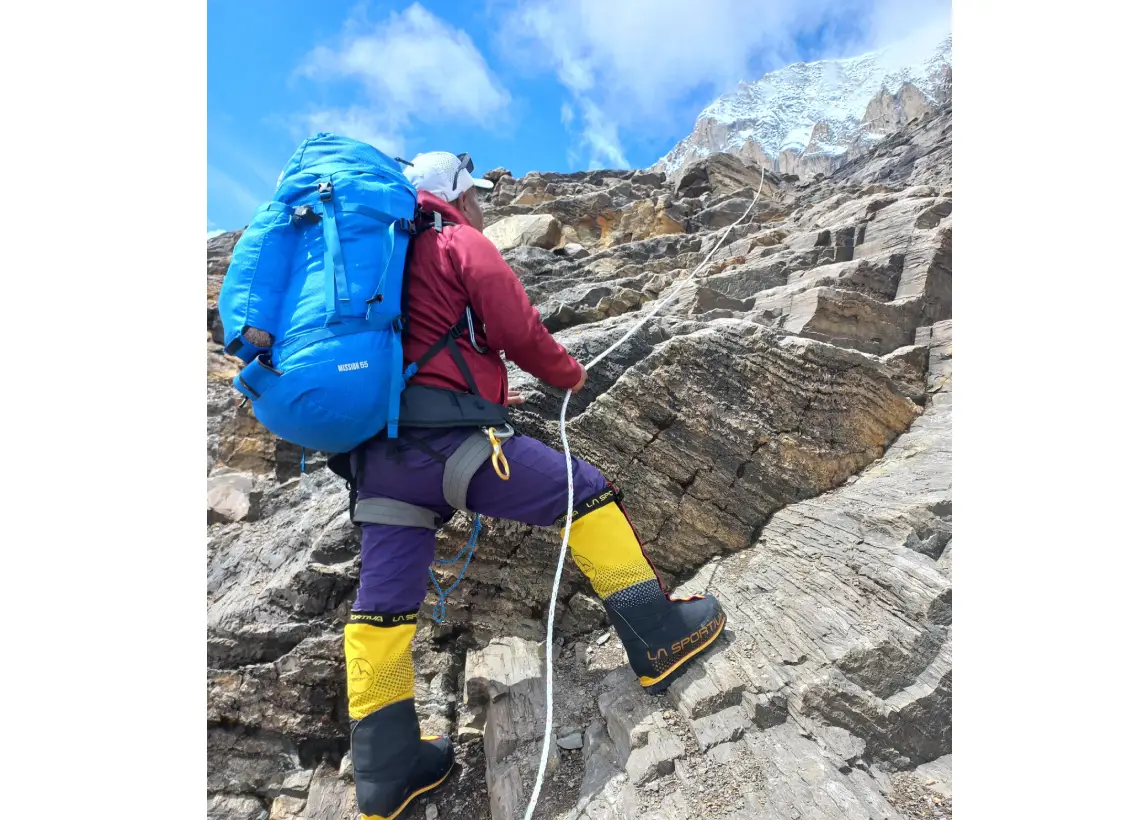
Makalu was first climbed in 1955 by a French team led by Jean Franco, with legendary mountaineers Lionel Terray and Jean Couzy among the first to reach the summit. Today, climbers tackle Makalu mainly via the classic Southeast Ridge, while the Northwest Ridge offers a more technical alternative for highly skilled alpinists. Both routes demand previous high-altitude experience above 7,000 m, strong ice skills, and a steady, focused approach.
The adventure begins in Kathmandu before flying to Tumlingtar and trekking through Num, Seduwa, Tashi Gaun, Khongma Danda, and the stunning Barun Valley toward Makalu Base Camp (4,850 m). From Base Camp, you’ll complete acclimatization rotations to higher camps before launching the final summit push to 8,485 m — a rewarding and truly Himalayan high-altitude experience.
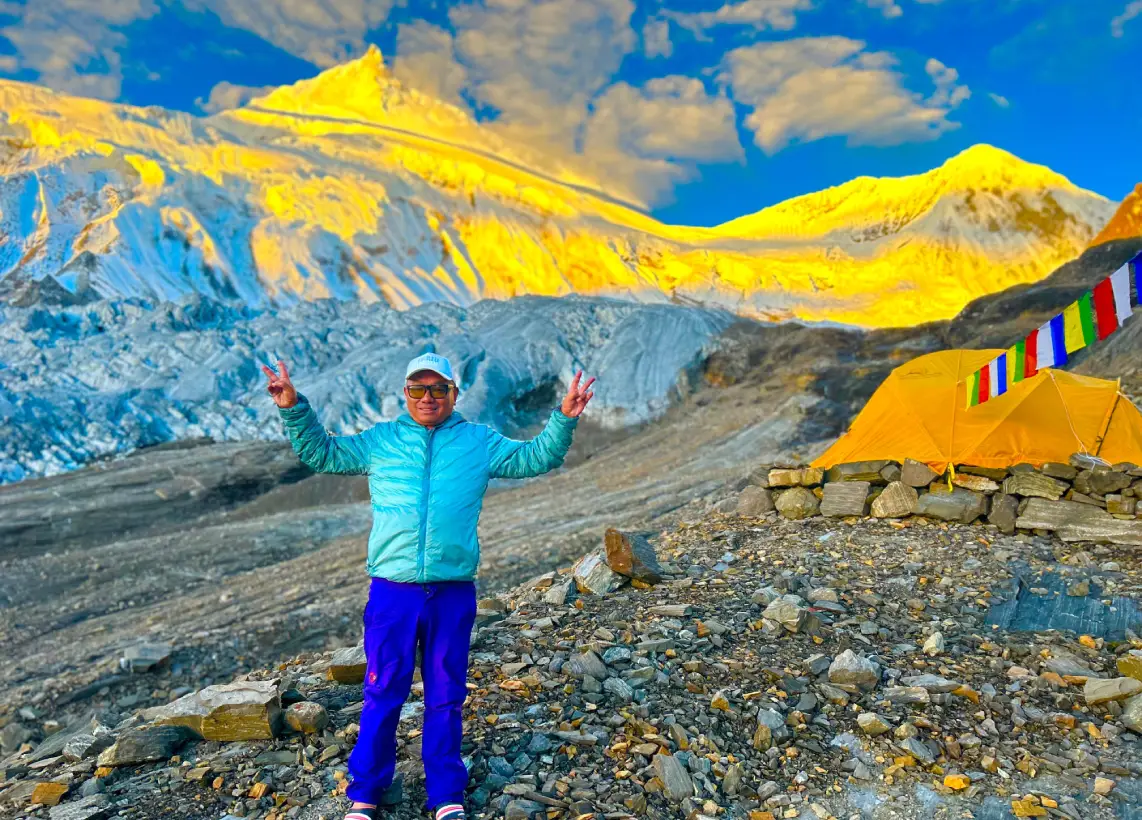
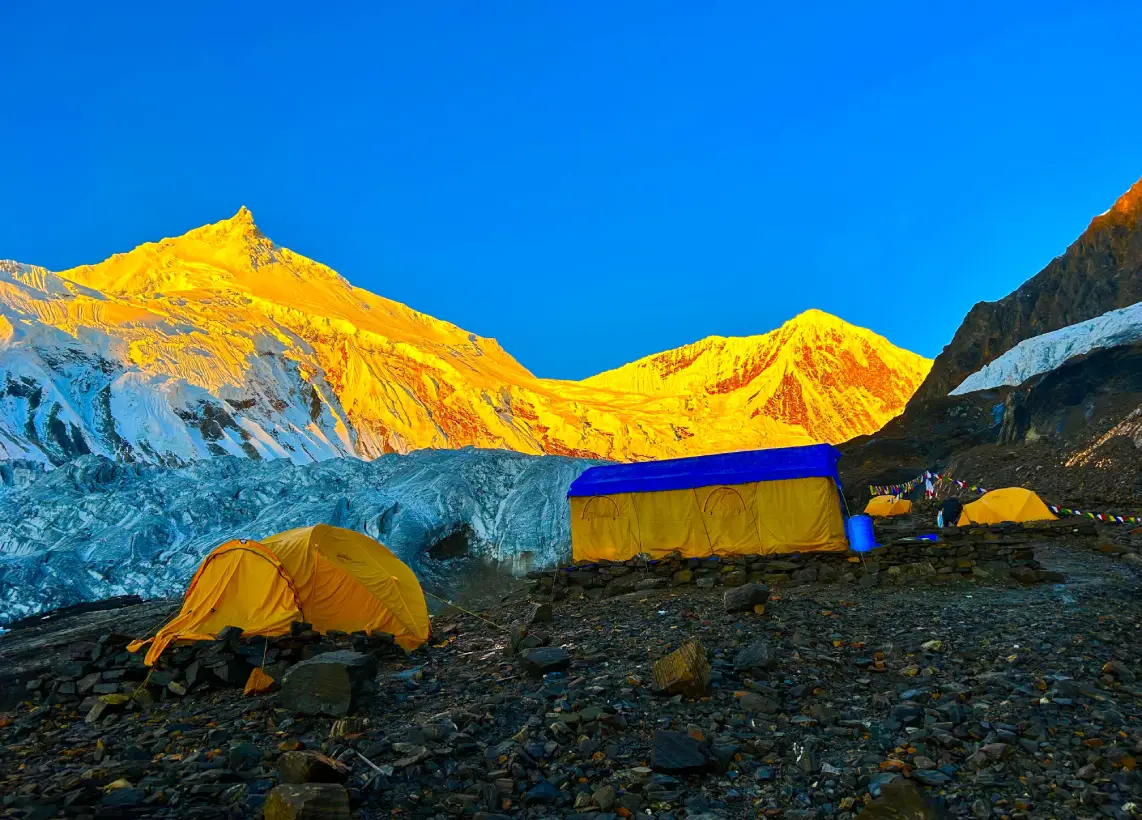
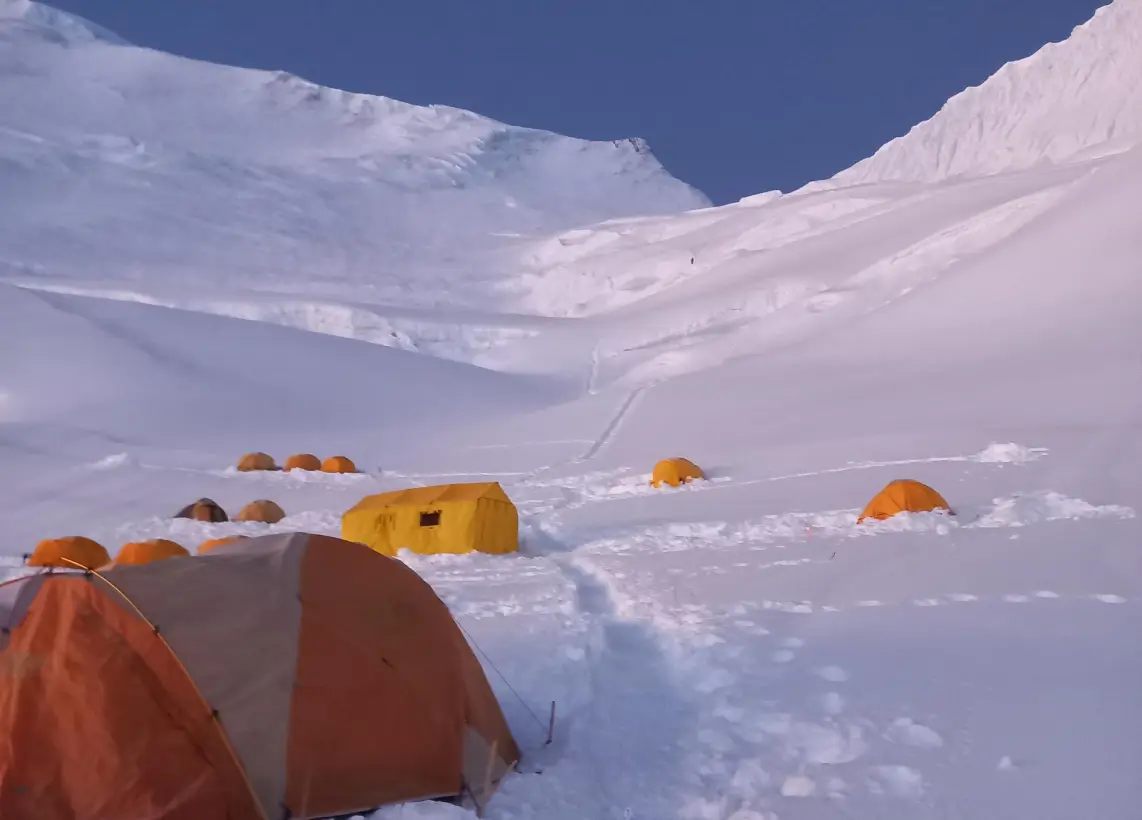
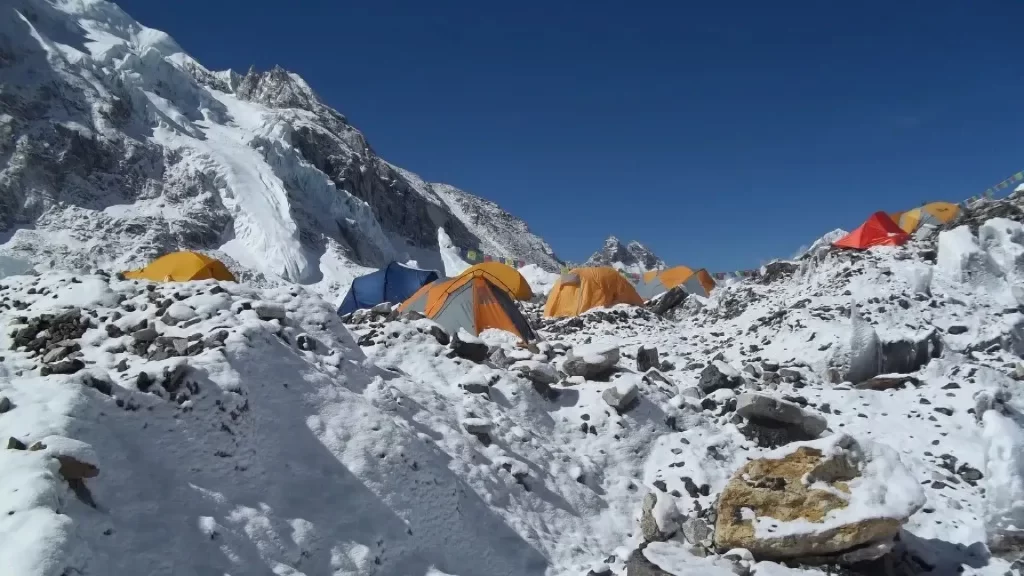
Set in one of the most remote and spectacular regions of Nepal, Makalu Base Camp sits beneath the immense South Face of Makalu. Surrounded by glaciers, icefalls, and towering ridgelines, this serene base provides a peaceful yet powerful environment for acclimatization. Fully equipped with dining tents, communication systems, and support staff, it becomes your Himalayan home for the climb.
Camp I (≈6,150 m) – Lower Barun Glacier
A long ascent over the lower Barun Glacier leads to Camp I. The terrain includes crevassed sections, mixed snow and ice, and long stretches of glacial moraine. Camp I is the first major step into high-altitude climbing on Makalu, offering dramatic views of the Southwest Face.
Camp II (≈6,700 m) – Upper Glacier Plateau
Reached via steep snow slopes and icy sections, Camp II sits on a broad plateau beneath Makalu’s imposing ridges. This camp is colder and more exposed, and marks the transition toward more technical terrain. Climbers typically spend significant acclimatization time here before heading to the higher camps.
Camp III (≈7,400 m) – Makalu La Approach
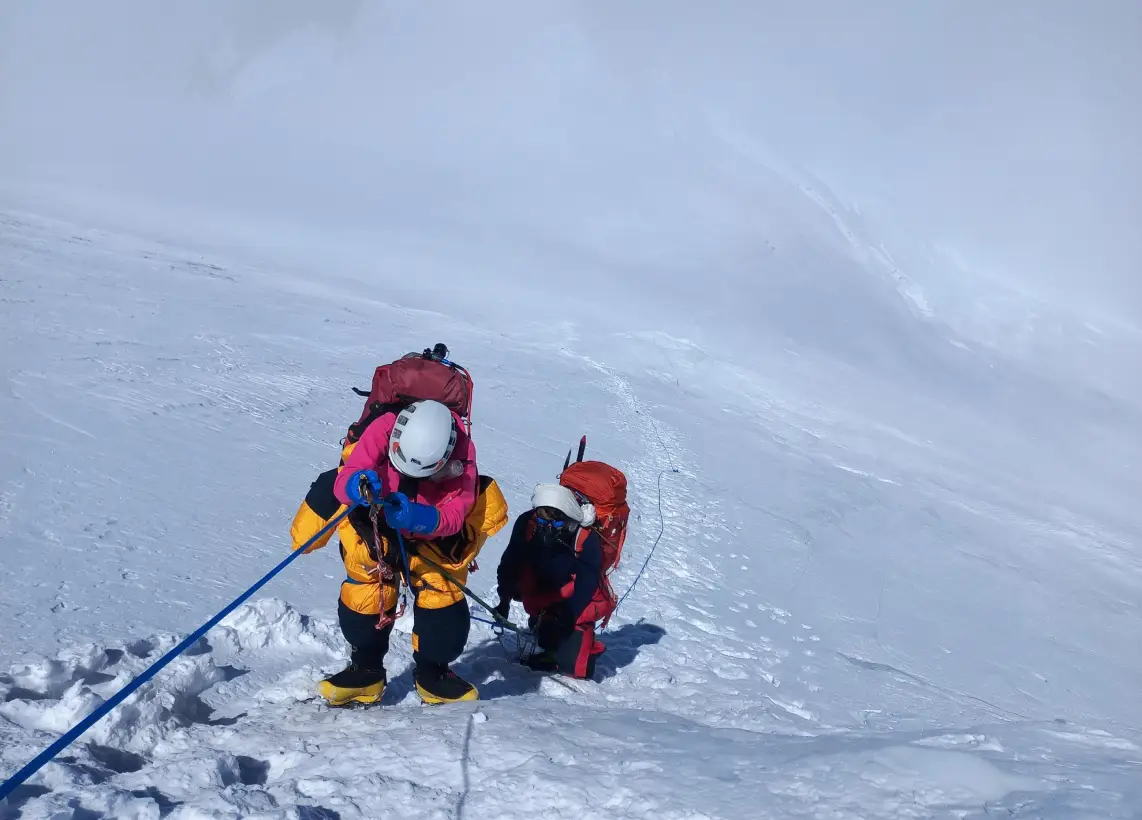
A challenging climb through steep ice slopes leads to Camp III, located just below the Makalu La (the high pass). Strong winds and frigid temperatures define this section. Camp III is a crucial acclimatization point before tackling the technical ridges above.
Camp IV (≈7,800–8,000 m) – Summit Camp
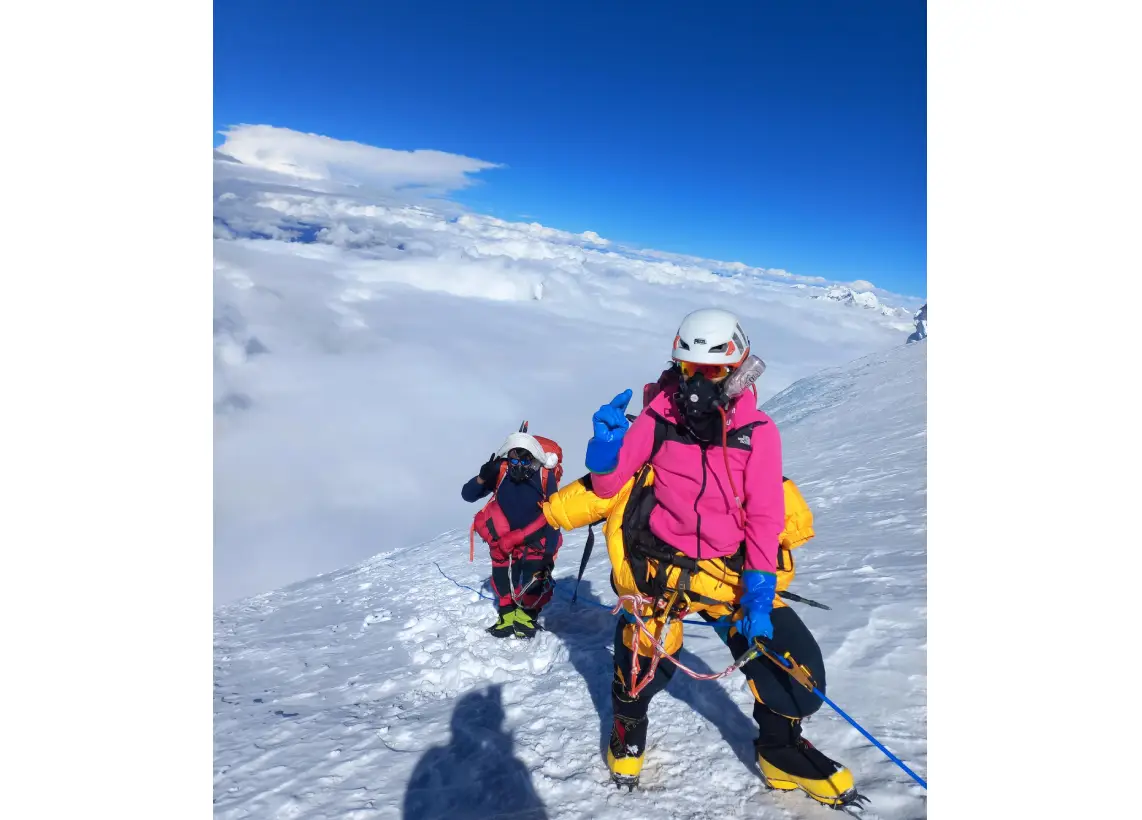
Perched high on Makalu’s upper slopes, Camp IV is the final staging point for the summit push. The route from here involves steep mixed terrain, exposed ridgelines, and sections of hard blue ice. Climbers begin their ascent in the night, moving toward the summit ridge as the Himalayas awaken beneath the rising sun.
Summit (8,485 m)
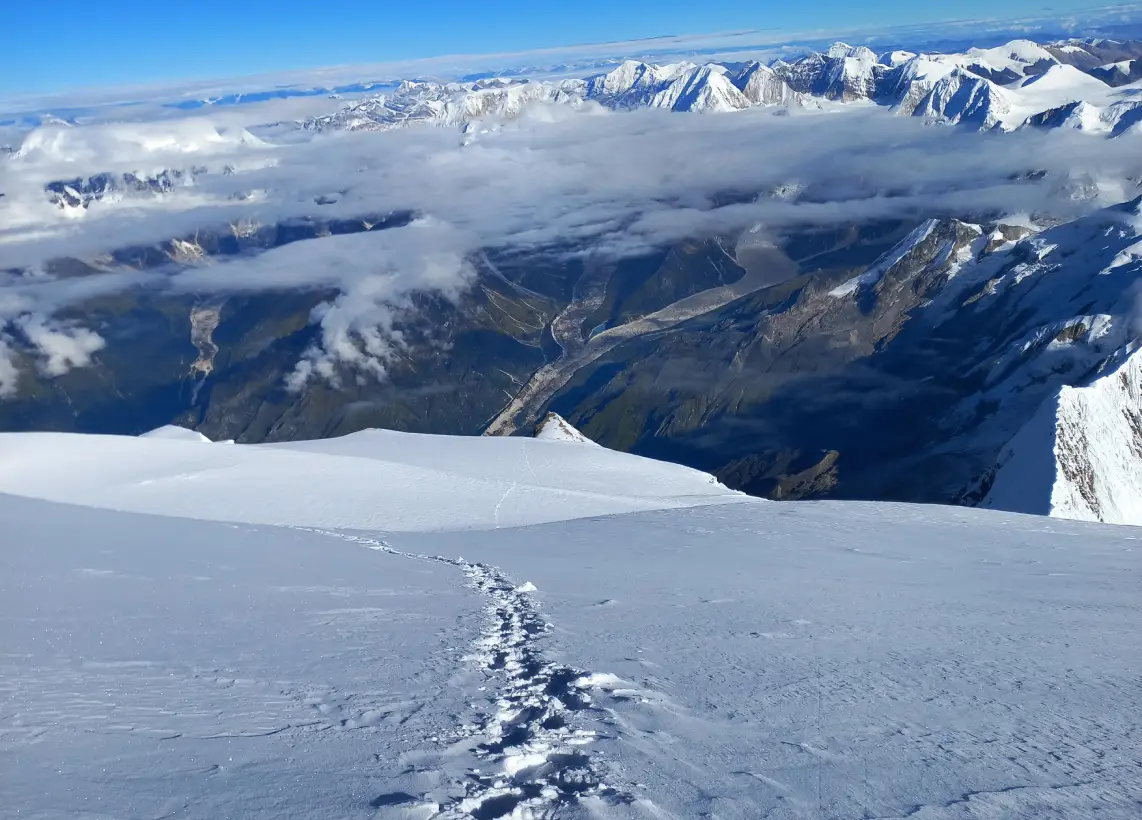
The summit of Makalu rewards climbers with breathtaking views of Everest, Lhotse, Baruntse, Chamlang, and the vast untouched valleys of eastern Nepal and Tibet. The final steps to the peak demand strength, focus, and resilience — offering one of the most rewarding 8000m summits in the Himalayas.
Arrive in Kathmandu and meet our representative at the airport. Transfer to your hotel for rest. In the evening, enjoy a welcome dinner and a detailed expedition briefing. Accommodation: Hotel
Day 2 – Rest & Expedition Preparation
A full day dedicated to documentation, equipment checks, and briefing with your Sherpa climbing team. Finalize high-altitude gear and logistics. Accommodation: Hotel
Day 3 – Fly Kathmandu to Tumlingtar, Drive to Num (1,560 m)
Take a scenic 40-minute flight to Tumlingtar, followed by a picturesque drive along terraced hills and dense forest ridges to the village of Num. Accommodation: Lodge
Day 4 – Trek to Seduwa (1,510 m)
Descend steeply to the Arun River, then climb through lush forest trails and traditional settlements to Seduwa — the gateway to Makalu–Barun National Park. Accommodation: Lodge
Day 5 – Trek to Tashi Gaun (2,070 m)
Trek through terraced farmlands and villages of the Sherpa and Rai communities. The trail gradually rises toward the last permanent settlement before the high passes. Accommodation: Lodge
Day 6 – Acclimatization Day in Tashi Gaun
A rest day to adjust to altitude. Optional hikes to nearby viewpoints or a visit to a local gompa. Accommodation: Lodge
Day 7 – Trek to Khongma Danda (3,760 m)
A steep ascent through rhododendron and oak forests. As you gain altitude, the views open toward distant peaks of the eastern Himalayas. Accommodation: Lodge
Day 8 – Cross Shipton La Pass (4,200 m) & Trek to Dobato (~3,650 m)
Cross several high passes including Ghungru La, Keke La, and the iconic Shipton La at 4,200 m. Descend to Dobato with breathtaking views of Chamlang and Baruntse. Accommodation: Camping
Day 9 – Trek to Yangle Kharka (3,640 m)
Descend through fir and juniper forests into the spectacular Barun Valley. Waterfalls, cliffs, and deep gorges accompany your trail. Accommodation: Camping
Day 10 – Trek to Langmale Kharka (4,450 m)
A gradual climb along the Barun River with stunning views of rising ice walls and glacial moraine. Accommodation: Lodge / Camping
Day 11 – Trek to Makalu Base Camp (4,850 m)
Arrive at Makalu Base Camp beneath the towering South Face of Makalu. Establish the expedition camp and settle in. Accommodation: Tent
Days 12–13 – Acclimatization at Base Camp
Rest, altitude adaptation hikes, equipment organization, and a traditional Puja ceremony for safety and blessings. Accommodation: Tent
Day 14 – Move to Advanced Base Camp (5,700 m)
A steady ascent to ABC, which becomes your main operational center during the expedition. Accommodation: Tent
Days 15–30 – Acclimatization Rotations (Camps I–III)
You will conduct multiple rotations to higher camps:
Camp I (≈6,150 m) – glacier travel & mixed terrain
Camp II (≈6,600 m) – steep snow slopes & crevasses
Camp III (≈7,300–7,400 m) – exposed ice slopes toward Makalu La
Return to Base Camp between rotations for recovery. Meals: Full Board | Accommodation: Tent
Days 31–42 – Summit Push (ABC → Camp IV → Summit → Base Camp)
When the weather window arrives, you begin the summit attempt via the Southeast Ridge (Northwest Ridge option for elite teams).
Climb through:
Camp I
Camp II
Camp III
Camp IV (7,800–8,000 m)
A night-time departure leads to the summit ridge, steep snow faces, and the final exposed traverse to the summit of Makalu (8,485 m).
Descend safely to Base Camp after your summit. Meals: Full Board | Accommodation: Tent
Day 43 – Base Camp Cleanup
Participate in environmental cleanup, pack equipment, and prepare for departure.
Accommodation: Tent
Days 44–47 – Trek Back via Langmale – Yangle Kharka – Khongma – Seduwa – Num
Retrace your steps through the Barun Valley and high passes toward Num. Accommodation: Lodge
Day 48 – Drive to Tumlingtar & Fly to Kathmandu
Drive back to Tumlingtar and take a short scenic flight to Kathmandu. Accommodation: Hotel
Day 49 – Leisure Day in Kathmandu
Relax, explore the city, or enjoy a well-deserved celebration dinner. Accommodation: Hotel
Day 50 – Departure
Transfer to Tribhuvan International Airport for your flight home. Meals: Breakfast
Why Royal Orchid Trek for Makalu Expedition – South East & North West Ridge
1. Expert Sherpa Leadership
Our climbing Sherpas bring decades of high-altitude experience across Nepal’s 8,000-meter peaks. Their technical skill, mountain judgment, and deep cultural knowledge ensure safe and confident progress on every section of the route.
2. Comprehensive Expedition Logistics
We provide full logistical support from start to finish — permits, oxygen systems, high-altitude tents, base camp infrastructure, and reliable load transportation. Every detail is handled with professionalism and care.
3. Safety-Focused Approach
Your well-being is our highest priority. We follow proven acclimatization schedules, maintain continuous weather monitoring, and coordinate route fixing with experienced high-altitude teams to ensure safe movement on the mountain.
4. Personalized Climbing Experience
We design flexible itineraries that respect your pace and prior experience. Whether you’re stepping up from 7,000 meters or adding Makalu to your 8,000-meter achievements, we tailor the journey to support your strengths.
5. Advanced Technology & Communication
Our expeditions utilize reliable satellite communication, GPS tracking, and advanced weather forecasting systems to support decision-making and provide real-time updates throughout the climb.
6. Emergency Coordination & Support
Should an emergency arise, helicopter evacuation can be arranged when conditions allow, along with on-route support and rapid communication to ensure your safety.
7. High Sherpa-to-Climber Ratio (1:1)
We maintain a one-to-one Sherpa ratio for technical sections, guaranteeing personal support, proper rope assistance, and greater safety on exposed slopes.
8. Proven Himalayan Expertise
With decades of successful operations across Nepal’s major peaks, Royal Orchid Treks & Expedition brings reliability, professionalism, and Sherpa heritage to every expedition — ensuring you feel supported from Kathmandu to the summit and back.
Include & Excludes
Include
4 nights hotel in Kathmandu with breakfast
All domestic flights and ground transfers (Kathmandu ↔ Tumlingtar)
All necessary climbing and trekking permits (Makalu Expedition Royalty, Makalu Barun National Park, Local Entry Fees)
Three meals a day (breakfast, lunch, dinner) with tea and coffee during trek and climb
Base Camp setup with personal tent, dining, kitchen, shower, and toilet tents
Shared high-altitude tents at Camps I–IV
1 professional Climbing Sherpa per climber
Porters/yaks for luggage and gear transportation
Sleeping bag, mattress, and all essential camping gear
Oxygen cylinders with regulators and backups
Fixed ropes, carabiners, and necessary climbing hardware
Insurance and wages for all Nepali staff and porters
Liaison officer, cooks, and full Base Camp support staff
Regular weather forecasts and communication facilities
Official summit certificate and souvenir from Royal Orchid Treks & Expedition
Exclude
International airfare to/from Nepal
Nepal entry visa fees
Personal mountaineering and travel insurance (mandatory)
Personal climbing gear and electronic equipment
Personal expenses (laundry, Wi-Fi, snacks, beverages, souvenirs)
Emergency evacuation and early descent
Sherpa summit bonus (minimum USD 1,800) and staff tips
Alcoholic drinks and bottled beverages
Entrance fees to temples, museums, or personal sightseeing
Extra hotel nights in Kathmandu for delays or early returns