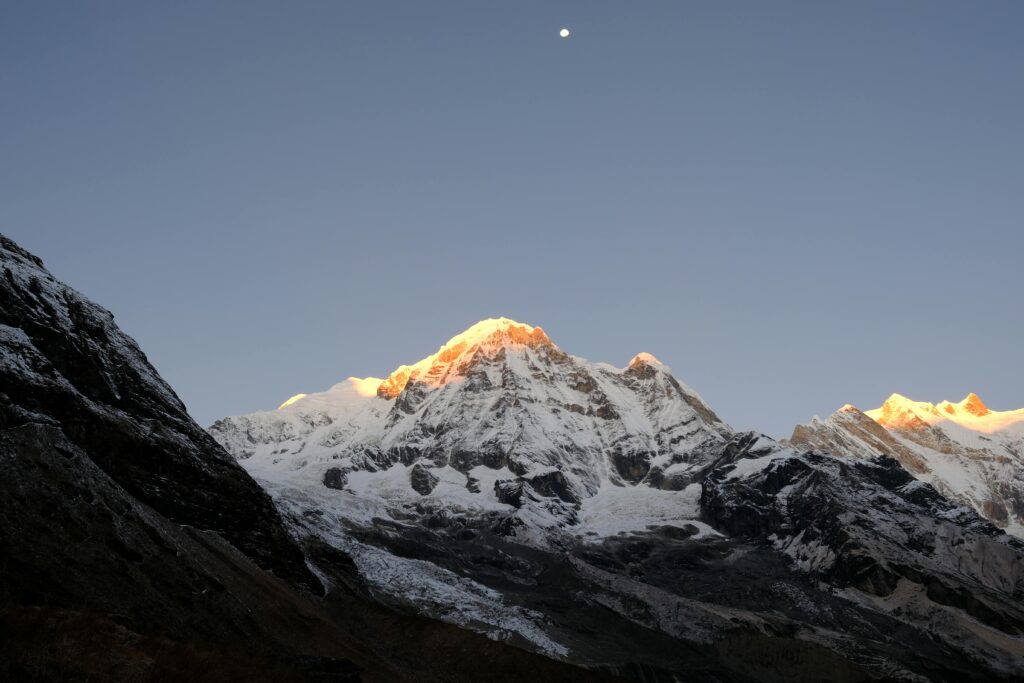
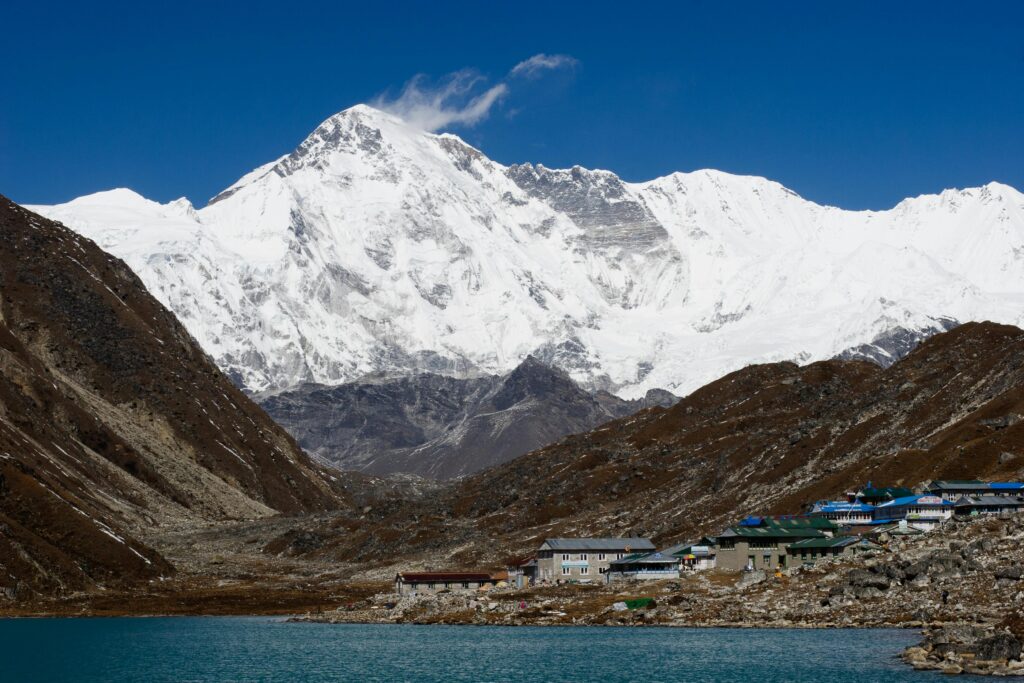
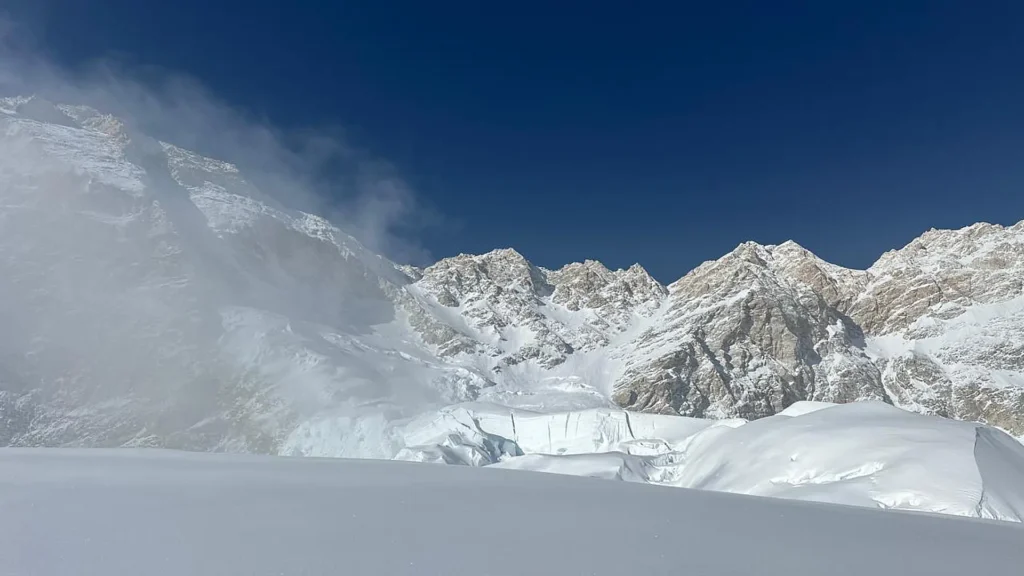
Rising to 8,167 meters (26,795 ft), Mt. Dhaulagiri stands as the seventh-highest mountain in the world and one of Nepal’s most formidable Himalayan giants. Its name—Dhawala Giri, meaning “White Mountain”—perfectly describes its immense ice-covered faces, sweeping ridgelines, and breathtaking presence above the Kaligandaki Gorge, the deepest valley on Earth. Only 34 km west of Annapurna I, Dhaulagiri dominates the western Himalayas with unmatched isolation and beauty.
The Dhaulagiri Expedition via the Northeast Ridge is widely regarded as one of the most challenging 8,000-meter ascents. Climbers encounter steep ice slopes, mixed rock-and-snow terrain, crevassed glaciers, and sections exposed to avalanche risk—making prior high-altitude experience essential. The mountain was first summited on 13 May 1960 by a Swiss/Austrian team led by Kurt Diemberger, and modern expeditions still follow this pioneering route.
With Royal Orchid Treks & Expedition, climbers begin their journey from Kathmandu, driving through Pokhara and into the Myagdi region to reach Darbang, the starting point of the approach trek. The route passes through traditional villages such as Muri, Boghara, Dobhan, and Sallaghari, gradually transitioning from lush forests to high alpine terrain. After acclimatizing at Italian Base Camp (3,660 m), the trail crosses the Chhonbardan Glacier to reach Dhaulagiri Base Camp (4,750 m), where the climbing phase begins.
Above Base Camp, three high camps are strategically established:
Camp I (≈5,850 m) – snow slopes and glacial ridges
Camp II (≈6,400 m) – steeper, mixed climbing terrain
Camp III (≈7,200–7,400 m) – exposed upper slopes leading to the summit ridge
With carefully planned rotations, expert Sherpa support, and a structured acclimatization schedule, climbers attempt the summit of Mt. Dhaulagiri before descending safely back to Base Camp.
The return journey completes the iconic Dhaulagiri Circuit, crossing French Pass (5,360 m) into the remote Hidden Valley, then over Dhampus Pass (5,200 m) toward Marpha/Jomsom. After returning to Pokhara, climbers enjoy a full leisure day in Kathmandu before departure.
This expedition is designed for experienced mountaineers who have completed climbs above 7,000 meters and are seeking a remote, technical, and highly rewarding ascent of one of Nepal’s greatest 8,000-meter peaks.
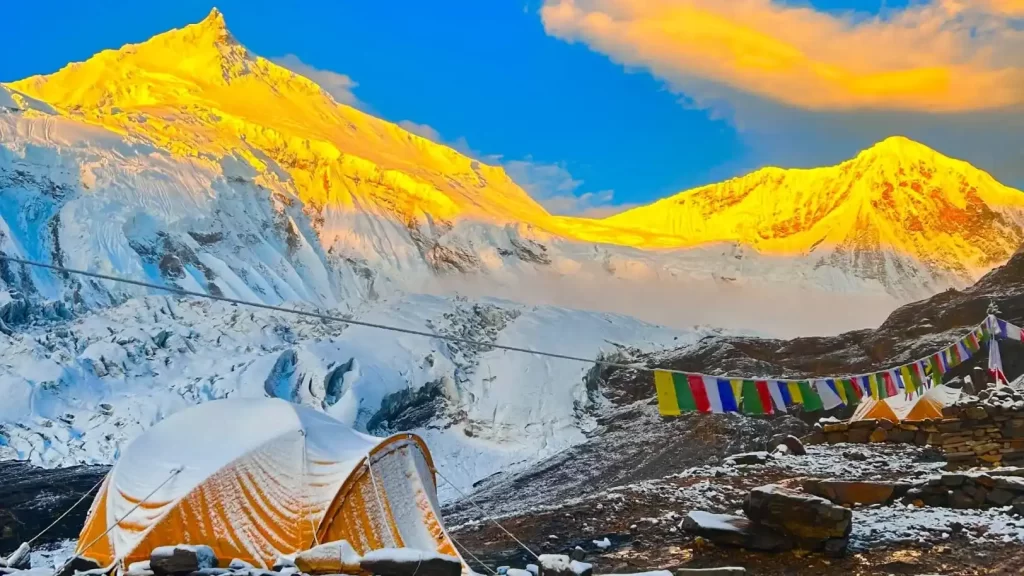
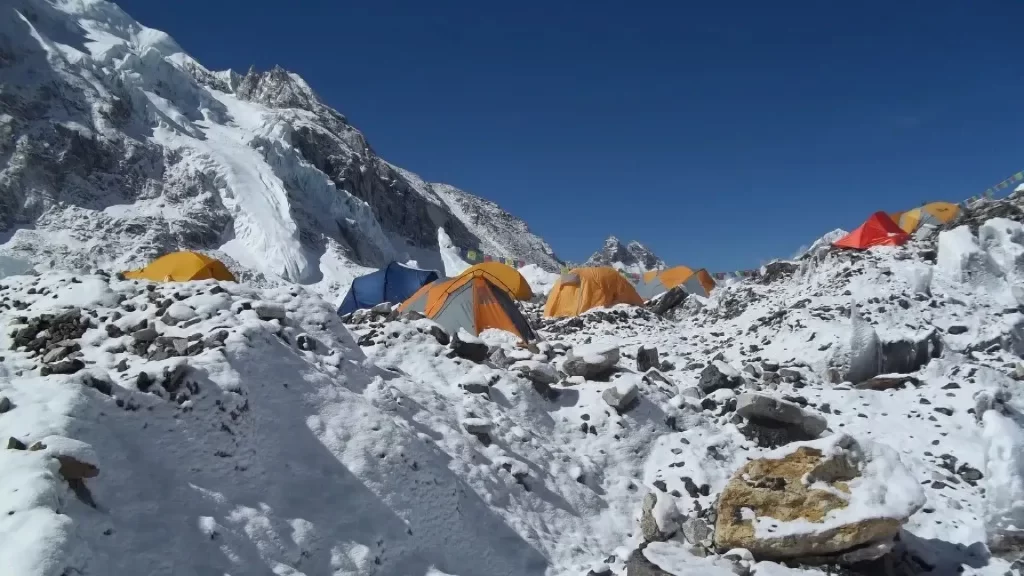
Positioned beneath the sweeping Northeast Ridge, Dhaulagiri Base Camp is fully equipped with dining facilities, a kitchen, rest tents, and communication systems. This glacier-based camp serves as the central hub for acclimatization, strategy meetings, and load rotations. The dramatic ice cliffs surrounding Base Camp set the tone for the technical climb ahead.
Camp I (5,850 m / 19,192 ft)
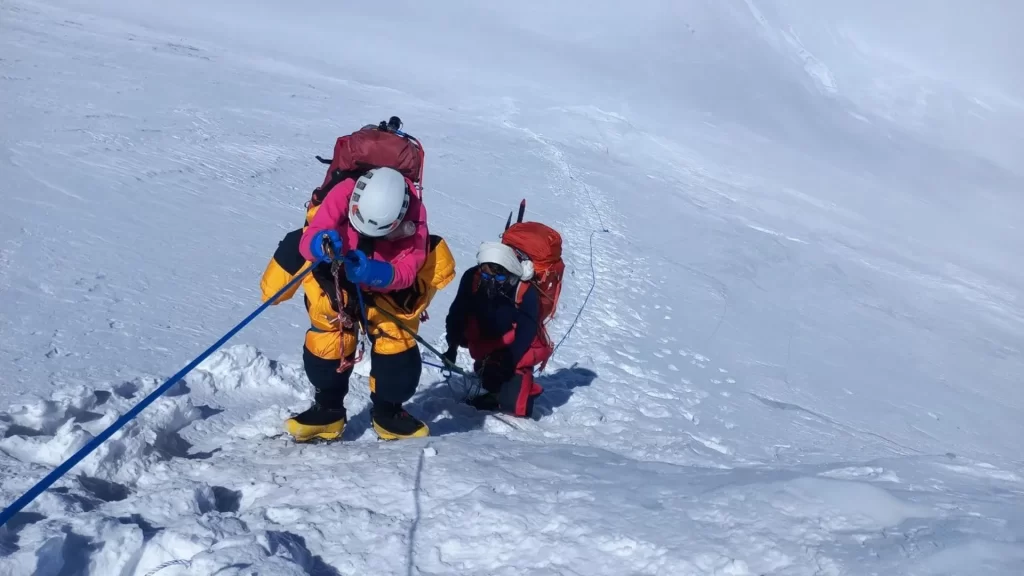
Reached in 4–5 hours from Base Camp, the route to Camp I involves moraine crossings, grassy slopes, and steady glacier travel. The section known as Jacob’s Ladder introduces the first major technical challenge, with sustained 35–40° ice slopes requiring fixed ropes and precise footwork. Camp I sits on a secure snow platform with wide glacier views.
Camp II (6,400 m / 20,997 ft)
Camp II is positioned above a broad snow terrace, reached by climbing mixed snow and ice slopes with several steep, rope-fixed sections. This area forms the technical crux of the expedition, demanding strength, focus, and efficient movement. Strong winds and variable conditions make this one of the most significant acclimatization and staging camps.
Camp III (7,400 m / 24,278 ft)
A challenging 4–5-hour ascent from Camp II leads to Camp III, located on the exposed upper slopes of Dhaulagiri. Climbers navigate sustained 35–45° snow and ice gradients, often facing harsh winds and rapidly shifting weather. This high camp is used only during the summit window and serves as the final launch point for the summit push.
Summit (8,167 m / 26,795 ft)
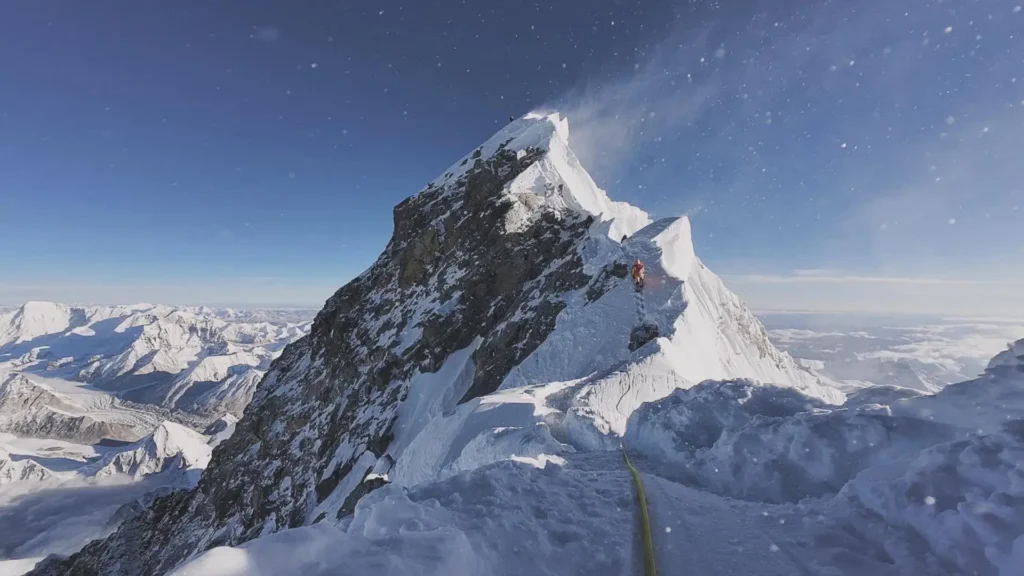
Summit day begins between 11:00 p.m. and 1:00 a.m., with climbers moving under starlight toward the upper ridge. The route includes steep snow slopes, a small false summit, and a narrow mixed ridge leading to the true summit. From the top of Dhaulagiri, climbers are rewarded with breathtaking 360° vistas that include Annapurna, Nilgiri, Tukuche Peak, and Manaslu—one of the most spectacular panoramas in the Himalayas.
Arrive in Kathmandu, meet the expedition team, and transfer to the hotel. Accommodation: Hotel
Day 2 – Expedition Preparation & Briefing
Briefings, document checks, and equipment inspection. Accommodation: Hotel
Day 3 – Drive Kathmandu → Pokhara (960 m)
Scenic drive along river valleys to Pokhara. Accommodation: Hotel
Day 4 – Drive Pokhara → Darbang (1,110 m)
Continue by jeep through rural landscapes to Darbang. Accommodation: Lodge
Day 5 – Trek Darbang → Phaliyagaon (≈1,800 m)
Begin trekking through farmland and small villages. Accommodation: Camping / Lodge
Day 6 – Trek Phaliyagaon → Muri (1,850 m)
Forest trails and stone steps lead to Muri. Accommodation: Lodge / Homestay
Day 7 – Trek Muri → Boghara (2,080 m)
Enter deeper Myagdi Valley, more remote terrain. Accommodation: Camping
Day 8 – Trek Boghara → Dobhan Kharka (≈2,500 m)
Forest and river-side trails toward Dobhan Kharka. Accommodation: Camping
Day 9 – Trek Dobhan → Sallaghari (≈3,100 m)
Rhododendron forest and alpine terrain. Accommodation: Camping
Day 10 – Trek Sallaghari → Italian Base Camp (3,660 m)
First close views of Dhaulagiri’s giant south face. Accommodation: Camping
Day 11 – Acclimatization Day at Italian Base Camp
Short acclimatization hikes and rest. Accommodation: Camping
Day 12 – Trek Italian BC → Glacier Camp (≈4,200 m) → Dhaulagiri Base Camp (4,750 m)
Cross Chhonbardan Glacier toward Base Camp. Accommodation: Tent
Days 13–40 – Climbing Period (C1 → C2 → C3 → Summit)
Rotations and summit push via:
Camp I (≈5,850 m)
Camp II (≈6,400 m)
Camp III (≈7,200–7,400 m)
Followed by the summit of Mt. Dhaulagiri (8,167 m) and descent to Base Camp. Accommodation: Tent
Day 41 – Base Camp Clean-Up & Preparation for Return
Rest and environmental cleanup. Accommodation: Tent
Day 42 – Trek Dhaulagiri BC → Yak Kharka via French Pass (5,360 m)
Cross French Pass into Hidden Valley. Accommodation: Camping
Day 43 – Trek Yak Kharka → Jomsom / Marpha (2,670 m) via Dhampus Pass
Descend into the Kali Gandaki Valley. Accommodation: Lodge
Day 44 – Drive Jomsom/Marpha → Pokhara
Return to Pokhara by flight or jeep. Accommodation: Hotel
Day 45 – Drive Pokhara → Kathmandu
Return to Kathmandu by road. Accommodation: Hotel
NEW – Day 46 – Leisure Day in Kathmandu
A relaxed, flexible day for sightseeing, shopping, spa, or simply resting after the expedition. Accommodation: Hotel
Day 47 – Final Departure
Transfer to Tribhuvan International Airport for your onward flight. Meals: Breakfast
Why Royal Orchid Trek for Mt. Dhaulagiri Expedition – Northeast Ridge
Expert Sherpa Leadership:
Climb under the guidance of veteran, government-licensed Sherpa mountaineers who have years of experience on Nepal’s most technical 8,000m peaks. Their deep route knowledge, calm decision-making, and high-altitude skill ensure expert support at every stage.
Complete Expedition Logistics:
Royal Orchid manages the entire expedition from start to finish — transportation, porters, climbing permits, equipment handling, and a fully staffed Base Camp. Every operational detail is handled professionally so you can focus fully on the climb.
Premium Base Camp Comfort:
Enjoy comfortable private sleeping tents, a heated dining hall, hygienic kitchen facilities, and proper toilet and shower setups. A well-managed Base Camp helps climbers rest, recover, and stay healthy throughout this demanding expedition.
Nutritious, Fresh Meals:
Our trained cooks prepare hygienic, energy-rich meals using fresh ingredients, along with hot drinks and beverages available anytime. Proper nutrition is a key part of acclimatization and high-altitude performance.
Safety-Driven Approach:
Safety is at the core of our operation — fixed rope systems, reliable radio communication, updated weather forecasts, and dedicated medical resources at Base Camp ensure a secure, well-monitored climbing environment.
Flexible Summit Strategy:
We adapt the summit plan depending on weather, team readiness, and acclimatization progress. This flexibility increases your chances of a successful and safe ascent, even in Dhaulagiri’s unpredictable conditions.
Authentic Sherpa Hospitality:
Our smaller team sizes allow for personal care and genuine connection. With warm Sherpa support, cultural immersion, and respectful mountain values, you’ll feel welcomed, supported, and part of the Royal Orchid family.
Include & Excludes
Include
4 nights hotel in Kathmandu with breakfast
Domestic flights: Kathmandu ↔ Pokhara
All ground transportation (private vehicle and local transfers)
Expedition permits and national park entry fees
All meals (breakfast, lunch, dinner, tea & coffee) during trek and climb
Tents at Base Camp (personal, dining, kitchen, toilet, shower)
High-altitude tents at Camps I–III
1 professional Climbing Sherpa per climber
Porters/yaks for luggage and equipment transport
Sleeping bag, mattress, and essential climbing gear
Oxygen bottles, mask, and regulator (if required)
Fixed ropes, carabiners, and climbing hardware
Comprehensive insurance for Nepali staff and porters
Weather forecasts and satellite communication during expedition
Summit certificate and souvenir from Royal Orchid Treks & Expedition
Exclude
International airfare to/from Nepal
Nepal entry visa fees
Personal travel & rescue insurance (mandatory)
Personal climbing gear and clothing
Personal expenses (laundry, Wi-Fi, snacks, beverages, souvenirs)
Emergency evacuation or helicopter rescue costs
Sherpa summit bonuses and tips
Alcoholic and bottled drinks
Sightseeing entrance fees
Extra hotel nights in Kathmandu due to delays or cancellations