Yala Peak Climbing

Trip Overview – Yala Peak Climbing

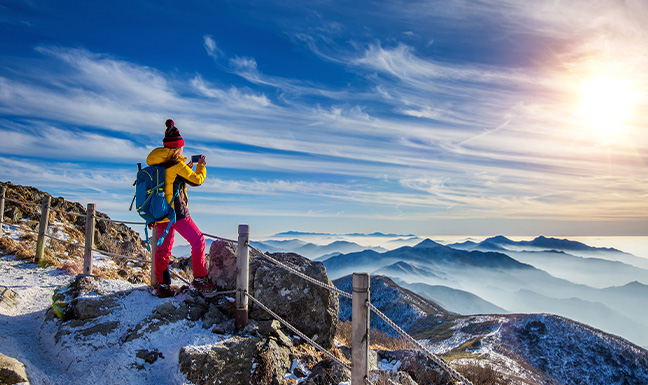
The Yala Peak Climb is one of Nepal’s most scenic and accessible Himalayan climbing adventures, perfect for trekkers seeking their first summit experience. Rising to 5,732 m, Yala Peak offers an exciting introduction to mountaineering with minimal technical difficulty, making it ideal for beginners who want a real Himalayan ascent.

Located in the pristine Langtang Valley north of Kathmandu, this journey blends cultural immersion, natural beauty, and high mountain adventure. The route follows the classic Langtang trekking trail through Langtang National Park where lush rhododendron and bamboo forests shelter rare wildlife such as red pandas and where traditional Tamang and Sherpa communities welcome visitors with warm hospitality.

As you pass through Lama Hotel, Langtang Village, and Kyanjin Gompa, you will experience vibrant mountain culture, Buddhist spirituality, and breathtaking alpine scenery. The approach to Yala Peak Base Camp at 4,800 m leads you across serene high meadows surrounded by dramatic glaciers and rugged Himalayan peaks.

On summit day, climbers are rewarded with sweeping views of Langtang Lirung, Ganesh Himal, Dorje Lakpa, Shishapangma, Naya Kanga, and even the distant Manaslu range. The panorama is one of the finest in the region and offers an unforgettable sense of achievement.

Perfect for first-time climbers as well as experienced trekkers seeking a short and rewarding Himalayan ascent, Yala Peak Climbing provides a true mountaineering experience close to Kathmandu combining nature, culture, and adventure in one memorable journey.
Langtang Ganja La Pass Trek

Langtang Ganja La Pass Trek – Trip Overview

The Langtang Ganja La Pass Trek is one of Nepal’s most thrilling and culturally immersive high-altitude adventures, connecting the glacial beauty of the Langtang Valley with the serene Buddhist landscapes of the Helambu region. Located just north of Kathmandu and bordering Tibet, this 15-day journey blends remote wilderness, deep cultural heritage, and dramatic Himalayan scenery.

The trek begins with a scenic drive to Syabrubesi, where the trail enters Langtang National Park and follows the Langtang Khola River through lush bamboo and rhododendron forests. As you ascend, the valley opens into wide alpine meadows and traditional Tamang villages rich in Tibetan Buddhist heritage.

Reaching Kyanjin Gompa (3,750 m), you step into the spiritual heart of Langtang. Surrounded by towering giants such as Langtang Lirung (7,227 m), Dorje Lakpa (6,966 m), and Yala Peak (5,520 m), this peaceful village invites exploration of its ancient monastery and famous yak cheese factory. A hike to Tserko Ri (4,984 m) offers a breathtaking 360° panorama over the Langtang Himal and beyond.

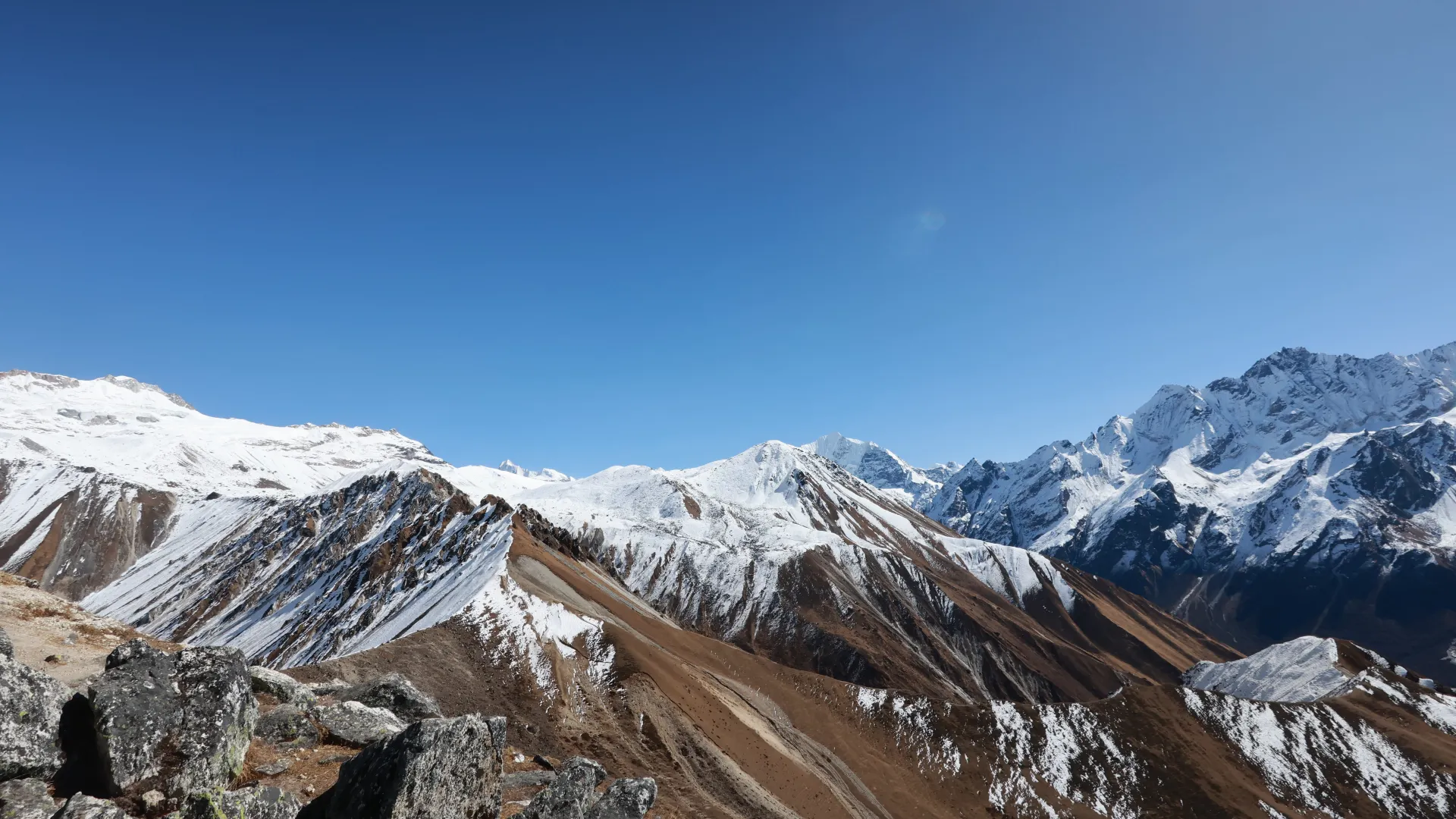
The true highlight of the trek is the challenging crossing of Ganja La Pass (5,130 m) a remote, snow-covered high pass requiring careful guidance and stable mountain conditions. From the top, trekkers are rewarded with awe-inspiring views of Langtang Lirung, Naya Kanga, Ganesh Himal, and vast Himalayan ridgelines stretching toward Tibet.

Descending into the Helambu region, the landscape transforms into terraced fields, rhododendron forests, and serene Sherpa villages like Tarkeghyang and Sermathang. This gentle, spiritual part of the journey provides a beautiful contrast to the rugged high mountain crossing, offering a peaceful and culturally rich finale before returning to Kathmandu

Perfect for experienced trekkers seeking a more remote and rewarding challenge, the Langtang Ganja La Pass Trek delivers adventure, culture, and pristine Himalayan beauty in one unforgettable journey.

Langtang–Gosaikunda Trek

Trip Overview – Langtang valley and Gosaikunda Trek

The Langtang valley and Gosaikunda Trek is one of Nepal’s most breathtaking and culturally rich Himalayan journeys, combining the glacier shaped landscapes of Langtang Valley with the sacred alpine lakes of Gosaikunda. Located just north of Kathmandu, this rewarding adventure blends natural beauty, Tamang and Sherpa heritage, spiritual significance and sweeping Himalayan panoramas into a single unforgettable route.

Your trek begins with a scenic drive to Syabrubesi, the entrance to Langtang National Park. Following the Langtang Khola River, the trail leads through lush bamboo and rhododendron forests, traditional Tamang villages and peaceful alpine meadows. Eventually, you reach Kyanjin Gompa at 3,750 meters, a serene monastery village surrounded by dramatic peaks including Langtang Lirung at 7,227 meters, Dorje Lakpa at 6,966 meters and Yala Peak at 5,520 meters.

For those seeking extra adventure, an optional ascent to Tsergo Ri at 5,150 meters offers one of the most breathtaking 360 degree Himalayan panoramas in Nepal.

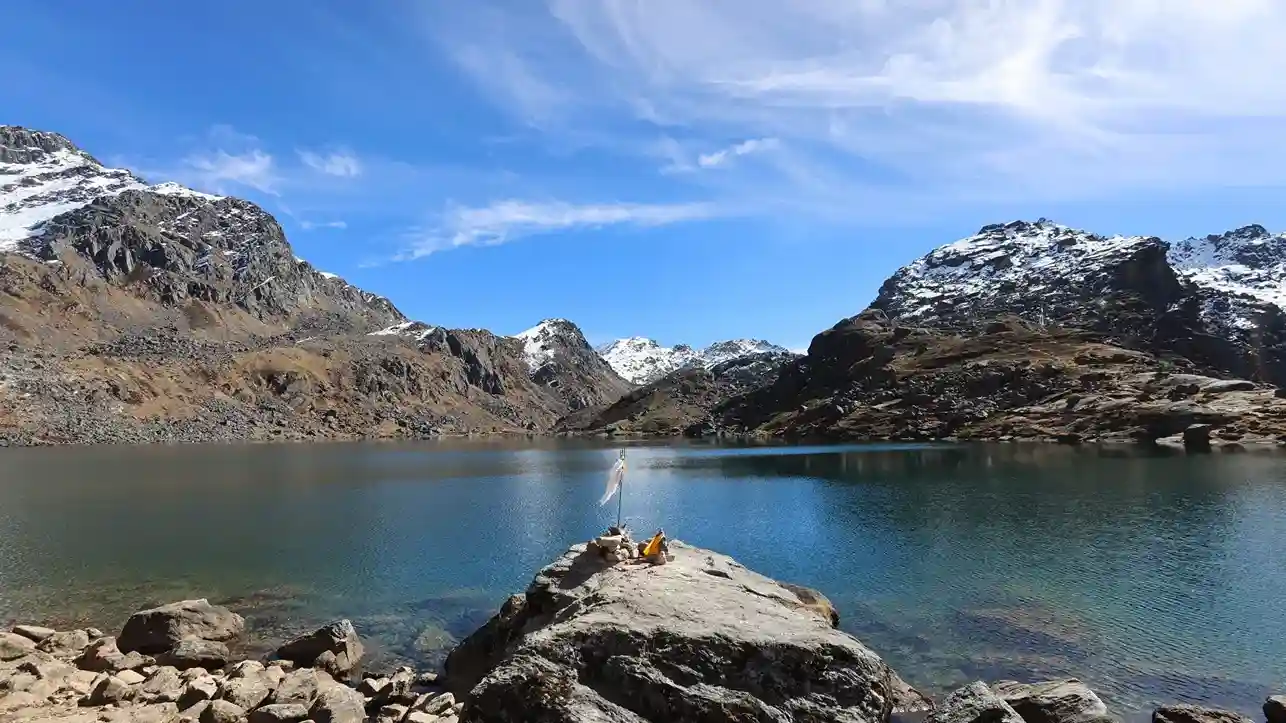
As the trek continues, the landscape transforms as you ascend toward the sacred highlands of Gosaikunda at 4,380 meters. These shimmering glacial lakes hold deep religious significance for both Hindus and Buddhists. Legend says Gosaikunda was created by Lord Shiva’s trident, and thousands of pilgrims visit each year seeking blessings and purification. Crossing the dramatic Laurebina Pass at 4,610 meters, you are rewarded with magnificent alpine views before descending through tranquil forests, ridgelines and traditional villages toward Dhunche.

With its balance of moderate difficulty, cultural immersion, spiritual depth and stunning natural diversity, the Langtang–Gosaikunda Trek offers one of Nepal’s finest multi region Himalayan experiences. It is an ideal choice for both first time trekkers and experienced adventurers looking for an accessible yet deeply meaningful journey close to Kathmandu.

Langtang Valley Trek

Trip Overview – Langtang Valley Trek

The Langtang Valley Trek, often celebrated as Nepal’s “Valley of Glaciers”, is one of the most scenic, culturally immersive and accessible Himalayan journeys. Just a day’s drive from Kathmandu, this rewarding 11 day adventure offers breathtaking mountain vistas, vibrant Tamang heritage and peaceful glacial landscapes without the crowds of more popular trekking regions.

The trail follows the Langtang Khola River through lush rhododendron and bamboo forests, charming Tamang villages and expansive alpine meadows where yak herders graze their livestock. Throughout the trek, you will be surrounded by iconic peaks such as Langtang Lirung at 7,227 meters, Dorje Lakpa at 6,966 meters and Langshisa Ri at 6,427 meters, all contributing to the valley’s dramatic, photogenic skyline.

Your journey reaches its spiritual and scenic heart at Kyanjin Gompa, a tranquil Himalayan settlement at 3,870 meters known for its ancient monastery, traditional yak cheese factory and panoramic mountain surroundings. From here, an optional ascent to Tsergo Ri at 5,150 meters rewards trekkers with an unforgettable 360 degree view of the Langtang Himal, sweeping glacial basins and distant ridges stretching toward Tibet.

Perfect for both beginners and seasoned trekkers, the Langtang Valley Trek blends accessibility, cultural depth and natural beauty, making it one of Nepal’s finest short Himalayan adventures.

Kailash Mansarovar Tour via Kerung Border

Trip Overview

The Kailash Mansarovar Tour via the Kerung Border is one of the most sacred and spiritually transformative journeys in the Himalayas. This pilgrimage offers devotees and travelers the rare opportunity to circumambulate Mount Kailash, the divine peak revered across Hinduism, Buddhism, Jainism, and Bon. Every year, thousands of pilgrims complete the 3-day Kailash circuit (parikrama) around the mountain and take a ritual dip in the holy Lake Mansarovar, believed to cleanse a lifetime of sins and bless one with spiritual liberation.

Your two-week journey begins in Kathmandu, heading north toward the Trans-Himalayan landscapes of Tibet via the Kerung border crossing. The route winds through dramatic gorges, vast plateaus, and the expansive farming valleys of western Tibet. Along the way, you are rewarded with sweeping views of Shishapangma, one of the world’s tallest peaks, and the wide-open skies of the Tibetan plateau. After reaching Darchen, the base point of the pilgrimage, the sacred Parikrama around Mount Kailash begins, supported by an experienced Nepalese–Tibetan team.

Mount Kailash stands as a symbol of cosmic power and spiritual purity.
Hindus believe it to be the heavenly abode of Lord Shiva and Goddess Parvati, positioned at the center of the universe.
Jains regard it as Astapada, where their first Tirthankara, Rishabhadeva, attained enlightenment.
Buddhists see it as a terrestrial manifestation of the celestial mandala of Dhyani Buddhas.
Bon practitioners revere it as the seat of their sky goddess, Sipaimen.

At the foot of the mountain lies Lake Mansarovar, one of the holiest lakes in Asia. Its crystal-clear turquoise water is believed to be created by Lord Brahma himself. Pilgrims bathe in its purifying waters, meditate on its serene shores, and visit the ancient monasteries surrounding the lake, including Seralung, Thrugo, Gosul, and Chiu Gompa – spiritual sites where saints like Milarepa and Padmasambhava once meditated.

The region is also the source of four major rivers of Asia: the Sutlej, Brahmaputra, Karnali, and Indus, each flowing toward distant oceans and civilizations.
Despite its remote and rugged terrain, the route to Kailash is now made more accessible through improved roads, comfortable lodges, and well-organized support teams. Throughout the Kailash circuit (parikrama), luggage and equipment are carried by support animals or vehicles, while a Nepalese–Tibetan crew ensures safety, nourishment, and smooth logistics at every step.

This thoughtfully crafted itinerary balances acclimatization, comfortable travel, and spiritual immersion, offering an unforgettable pilgrimage for seekers, adventurers, and devotees alike.

Lobuche East Peak Climbing

Expedition Overview

Lobuche East Peak (6,119 m) is one of Nepal’s most iconic trekking peaks, standing proudly above the Khumbu Glacier near Mount Everest. Known for its striking ridgelines and thrilling climbing sections, it offers a perfect balance between technical challenge and breathtaking Himalayan beauty, making it a favorite among trekkers and climbers aiming to step up from peaks like Island Peak or Mera Peak.

The route follows the legendary Everest Base Camp trail, passing through Namche Bazaar, Tengboche, and Dingboche, with cultural highlights such as monasteries, yak herders, and Sherpa villages along the way. From Lobuche village, climbers make their way to the high camp before tackling the summit ridge, offering a rewarding combination of rock, ice, and snow climbing.

From the summit, you will enjoy a 360° panoramic view of the Himalayan giants including Everest (8,848 m), Lhotse (8,516 m), Makalu (8,463 m), Ama Dablam (6,812 m), and Cho Oyu (8,201 m), one of the most stunning vistas in Nepal.

Though slightly more technical than Island Peak, Lobuche East remains achievable for fit trekkers with basic mountaineering training. Our experienced Sherpa guides, carefully crafted itinerary, and safety-first approach ensure an enjoyable and successful climb through the heart of the Khumbu region.


Mera Peak Climbing

Trip Overview

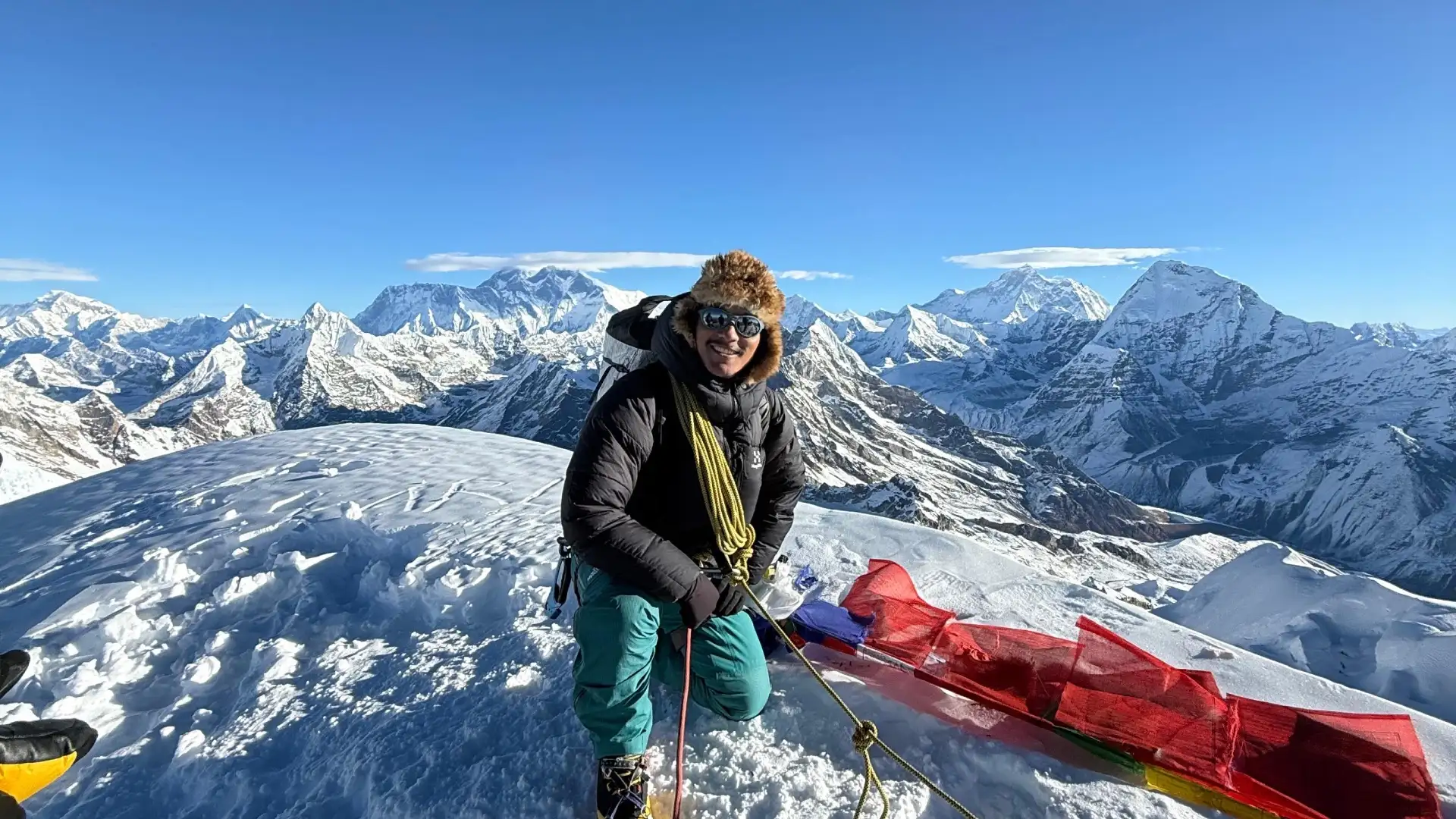
Mera Peak (6,476 m) Nepal’s highest trekking peak is a true Himalayan gem that combines adventure, natural beauty, and cultural immersion. Located in the Mahalangur section of the Himalayas, just south of Mt. Everest, Mera offers one of the most panoramic Himalayan vistas from Everest and Lhotse in the north to Makalu, Cho Oyu, Kanchenjunga, and Ama Dablam across the horizon.

The journey begins with a short flight to Lukla, followed by a scenic trail across Zatrwa La Pass (4,610 m) into the remote Hinku Valley. This quieter, less-trodden route offers pristine forests, yak pastures, and authentic Sherpa villages the perfect environment for natural acclimatization and cultural connection.

First summited in 1953 by J.O.M. Roberts and Sen Tenzing, Mera Peak has since become one of the most popular Himalayan climbing goals for those taking their first step into mountaineering. The northern route is non-technical and accessible for beginners with basic training, making it ideal for trekkers seeking their first summit experience above 6,000 m.

During the spring and autumn seasons, clear skies, stable snow, and moderate temperatures ensure the best conditions for climbing. Whether you’re a seasoned adventurer or a first-time climber, Mera Peak offers an unforgettable balance of wilderness trekking, cultural encounters, and the thrill of standing atop Nepal’s highest trekking peak.

Mt. Annapurna I Expedition – North Face

Trip Overview

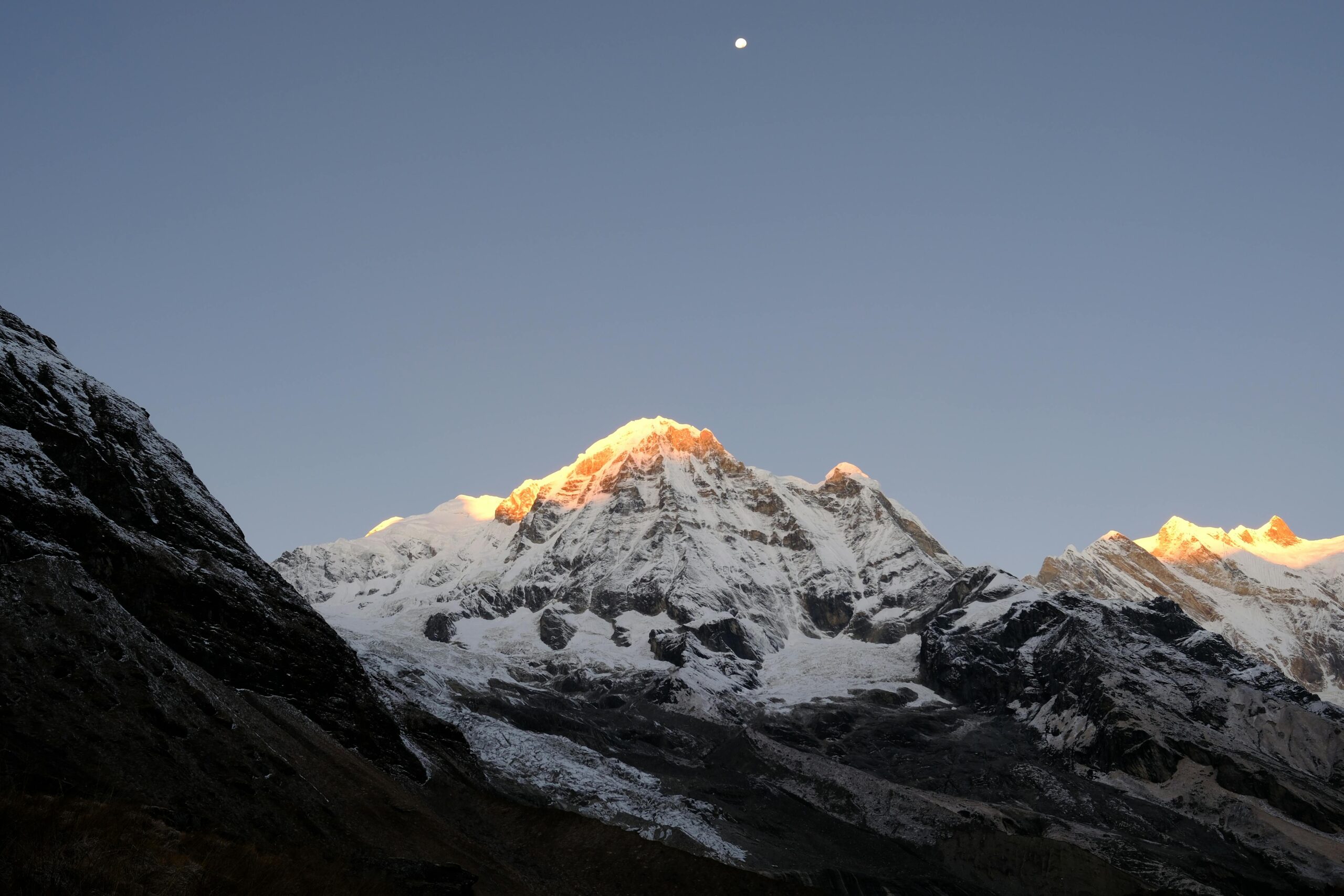
Rising to 8,091 m (26,545 ft), Mt. Annapurna I is the 10th-highest mountain in the world and one of Nepal’s most formidable 8,000-meter peaks. Located in the north-central Himalaya, this mighty summit forms the centerpiece of the Annapurna Massif and was the first 8,000-meter mountain ever climbed—a historic feat accomplished by Maurice Herzog and Louis Lachenal on June 3, 1950.

Annapurna I is renowned among mountaineers for its technical difficulty and high objective risk, with steep faces, shifting glaciers, and unpredictable avalanches. The North Face Route, the standard climbing route, is considered one of the most challenging yet rewarding expeditions in the Himalayas. The massif also includes notable peaks such as Annapurna II (7,937 m), Annapurna III (7,555 m), Annapurna IV (7,525 m), and Annapurna South (7,219 m), making the area a stunning mountaineering destination.

Climbing Annapurna I Expedition is more than a climb—it’s a test of endurance, skill, and spirit. The expedition demands prior high-altitude experience (ideally above 6,000 m), technical competence on mixed terrain, and strong teamwork. The reward is the extraordinary experience of standing atop one of the world’s most dangerous yet awe-inspiring mountains, with panoramic views of the Annapurna, Dhaulagiri, and Mansiri ranges.

With Royal Orchid Treks & Expedition, every stage—from Kathmandu to the summit—is planned with precision and care. Our team of highly experienced Sherpa guides, comprehensive logistics, and safety-first strategy ensure that climbers can focus on performance and acclimatization while we manage the rest. This expedition is ideal for serious mountaineers seeking a guided Annapurna climb in Nepal that combines adventure, challenge, and excellence.

Mt. Manaslu Expedition – Northeast Route

Trip Overview

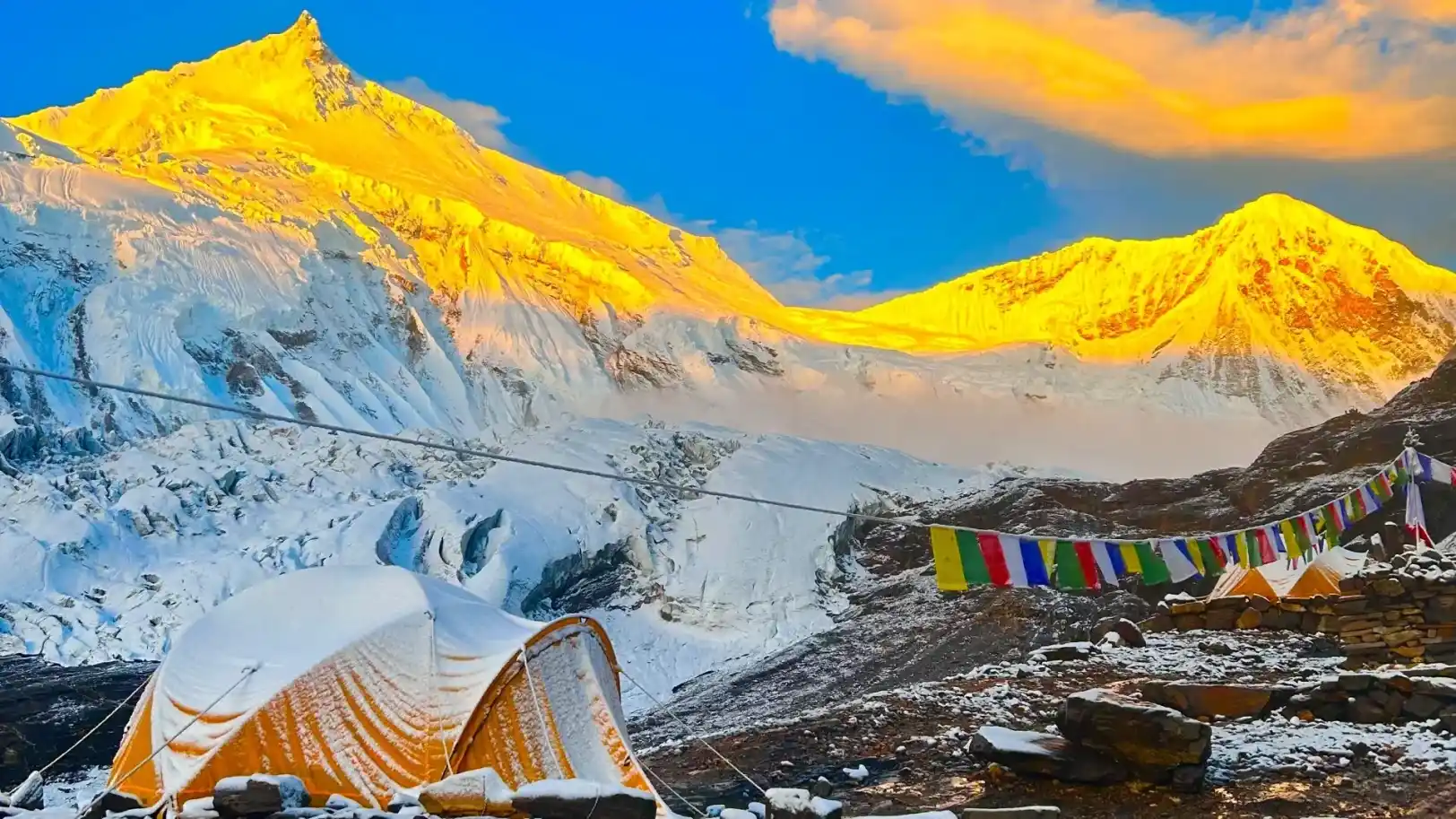
Rising to 8,163 m (26,781 ft), Mt. Manaslu—the “Mountain of the Spirit”—is the eighth-highest mountain in the world and one of Nepal’s most captivating 8,000-meter peaks. Located in the remote Mansiri Himal range of the Gorkha District, the mountain’s name originates from the Sanskrit word Manasa, meaning “intellect” or “soul,” symbolizing the spiritual depth and challenge it represents. Its imposing glaciated ridges dominate the landscape, surrounded by deep valleys and traditional Tibetan-influenced villages that remain untouched by mass tourism.

First summited on May 9, 1956, by Toshio Imanishi and Gyalzen Norbu Sherpa, Manaslu has since become a prestigious climb for seasoned mountaineers seeking a technically demanding but less crowded alternative to Everest. Its Northeast Route is considered the classic line to the summit—an elegant yet challenging ascent involving steep snow slopes, ice seracs, and crevasse fields that demand steady technique, endurance, and patience.

Climbing Manaslu is a journey that requires more than physical fitness—it calls for mental resilience, careful acclimatization, and previous high-altitude experience (ideally above 6,000–7,000 meters). Climbers face long summit days, unpredictable weather, and extended periods of exposure in harsh alpine conditions. Excellent cardiovascular endurance, strength for sustained climbing with heavy loads, and strong teamwork are crucial.

With Royal Orchid Treks & Expedition, every stage of this expedition—from Kathmandu to the summit—is meticulously managed. You’ll be guided by highly experienced Sherpa climbers, supported by comprehensive logistics, reliable weather forecasting, and full safety systems. Our structured acclimatization schedule, professional communication setup, and small-group approach ensure a safe, focused, and successful ascent of this extraordinary mountain.

The Manaslu Expedition offers not only the thrill of standing atop an 8,000-meter summit but also an immersion into Nepal’s authentic mountain culture—a balance of adventure, spirituality, and achievement in one of the Himalayas’ most inspiring landscapes.

Mt. Dhaulagiri Expedition – Northeast Ridge

Dhaulagiri Expedition Overview

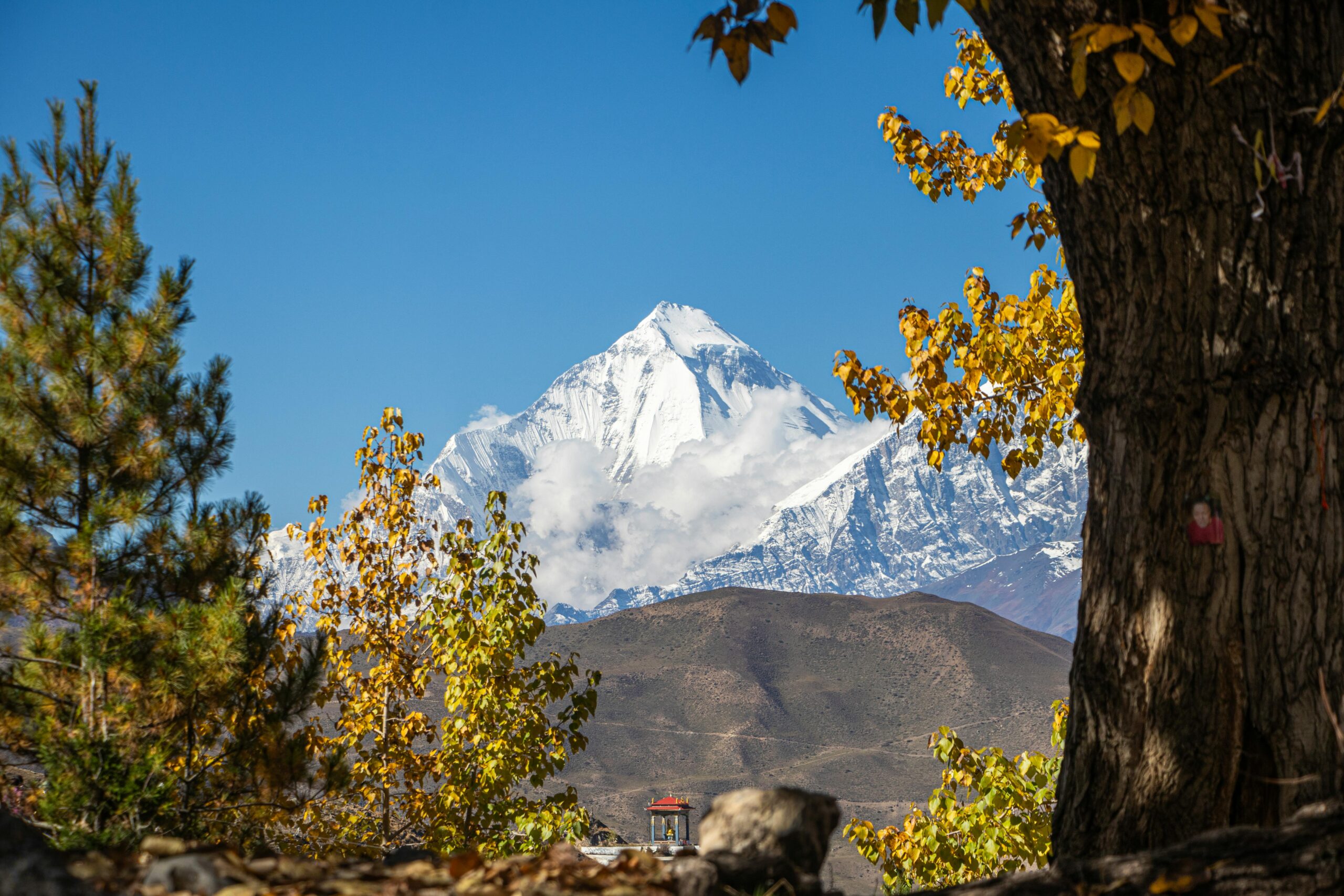
Rising to 8,167 meters (26,795 ft), Mt. Dhaulagiri stands as the seventh-highest mountain in the world and one of Nepal’s most formidable Himalayan giants. Its name—Dhawala Giri, meaning “White Mountain”—perfectly describes its immense ice-covered faces, sweeping ridgelines, and breathtaking presence above the Kaligandaki Gorge, the deepest valley on Earth. Only 34 km west of Annapurna I, Dhaulagiri dominates the western Himalayas with unmatched isolation and beauty.

The Dhaulagiri Expedition via the Northeast Ridge is widely regarded as one of the most challenging 8,000-meter ascents. Climbers encounter steep ice slopes, mixed rock-and-snow terrain, crevassed glaciers, and sections exposed to avalanche risk—making prior high-altitude experience essential. The mountain was first summited on 13 May 1960 by a Swiss/Austrian team led by Kurt Diemberger, and modern expeditions still follow this pioneering route.

With Royal Orchid Treks & Expedition, climbers begin their journey from Kathmandu, driving through Pokhara and into the Myagdi region to reach Darbang, the starting point of the approach trek. The route passes through traditional villages such as Muri, Boghara, Dobhan, and Sallaghari, gradually transitioning from lush forests to high alpine terrain. After acclimatizing at Italian Base Camp (3,660 m), the trail crosses the Chhonbardan Glacier to reach Dhaulagiri Base Camp (4,750 m), where the climbing phase begins.

Above Base Camp, three high camps are strategically established:

  • Camp I (≈5,850 m) – snow slopes and glacial ridges
  • Camp II (≈6,400 m) – steeper, mixed climbing terrain
  • Camp III (≈7,200–7,400 m) – exposed upper slopes leading to the summit ridge

With carefully planned rotations, expert Sherpa support, and a structured acclimatization schedule, climbers attempt the summit of Mt. Dhaulagiri before descending safely back to Base Camp.

The return journey completes the iconic Dhaulagiri Circuit, crossing French Pass (5,360 m) into the remote Hidden Valley, then over Dhampus Pass (5,200 m) toward Marpha/Jomsom. After returning to Pokhara, climbers enjoy a full leisure day in Kathmandu before departure.

This expedition is designed for experienced mountaineers who have completed climbs above 7,000 meters and are seeking a remote, technical, and highly rewarding ascent of one of Nepal’s greatest 8,000-meter peaks.