What It Takes to Summit Mount Everest: Preparation, Strength, and Mindset
Summiting Mount Everest is not a single moment of achievement. It is the result of months, and often years, of preparation, followed by weeks of careful acclimatisation, waiting, and decision-making on the mountain itself.Climbing Everest is not about strength alone. It requires long-term physical conditioning, high-altitude experience, logistical planning, patience, and mental resilience. Understanding this reality is essential for anyone considering an Everest expedition.
A Sherpa Perspective on What It Takes
For Sherpas, Everest is not something to conquer. It is an environment that demands respect and careful judgement. Those who succeed are not always the strongest climbers. They are usually the most patient. They listen to the mountain, respect weather patterns, and move only when conditions allow. Patience is not passive. It is an active skill developed through experience and discipline.
Is It Really Possible to Summit Mount Everest?
Yes, summiting Mount Everest is possible, and many climbers reach the summit each year. However, it is important to understand that Everest is not a challenge that can be approached quickly or casually. Those who succeed typically arrive with: Years of high-altitude mountaineering experience, Proven ability to function above 6,000 and 7,000 metres, Strong physical conditioning and disciplined mental preparation. Everest is not an introduction to mountaineering. It is the culmination of a long and deliberate progression.
Physical Preparation: Endurance Over Power
Long-Term Conditioning
Everest demands sustained physical effort over extended periods rather than short bursts of strength. Climbers must be prepared for continuous movement in thin air while wearing heavy boots, down suits, and oxygen systems, often with limited recovery due to cold temperatures and disrupted sleep. Training focuses on long-duration aerobic fitness, leg strength, and overall durability. Consistency over many months is far more important than short-term intensity.
Strength for Efficiency and Injury Prevention
Strength training supports efficient movement and reduces the risk of injury during long expeditions. Key physical requirements include: Strong legs for steep snow and ice slopes, A stable core for balance while moving on fixed ropes, Joint resilience for repeated load carrying. Everest does not reward excessive muscle mass. It rewards efficiency, stamina, and controlled movement.
High-Altitude Experience Before Everest
No amount of sea-level training can prepare the body for extreme altitude. Before attempting Everest, climbers should have completed multiple expeditions above 6,000 metres and ideally gained experience above 7,000 metres. Equally important is familiarity with personal altitude responses. At extreme altitude, appetite decreases, sleep becomes fragmented, and even simple tasks require significant effort. Knowing how your body reacts in these conditions is critical to safe decision-making.
Acclimatisation and Time on the Mountain
One of the most misunderstood aspects of climbing Everest is the amount of time required. A typical Everest expedition lasts six to nine weeks, much of which is spent acclimatising rather than ascending. Progress is measured in physiological adaptation rather than altitude gained.
Camp Rotations and Adaptation
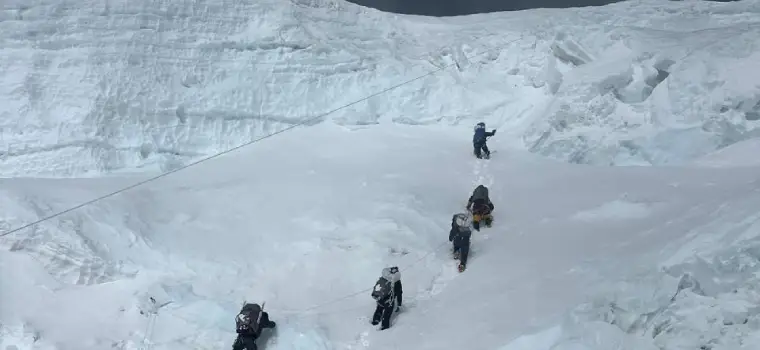
Climbers move gradually between Base Camp, Camp I, Camp II, and Camp III during acclimatisation rotations. Repeated ascents and descents allow the body to adjust to reduced oxygen levels. This process cannot be rushed. Skipping acclimatisation significantly increases risk. During this period, climbers train, rest, eat, and wait. Patience is an essential part of preparation.
Waiting for the Right Weather Window
Even after weeks of preparation, a summit attempt depends entirely on weather conditions. Everest offers only a very short window each season when winds drop and conditions allow a safe summit push. This window may last only a few days or, at times, only hours. Climbers must be prepared to: Wait patiently for safe conditions, Accept delays and uncertainty, Turn back if weather deteriorates or conditions change. Many well-prepared climbers do not summit simply because weather conditions never align safely.
Mental Preparation: The Deciding Factor
Psychological Endurance
Mental strength is often more important than physical strength on Everest. Climbers must cope with long periods of inactivity at Base Camp, ongoing physical discomfort, fatigue, anxiety related to weather uncertainty, and emotional stress caused by isolation.
The ability to remain calm, focused, and disciplined over many weeks is essential.
Decision-Making in Extreme Conditions
Above 8,000 metres, judgement becomes impaired due to lack of oxygen. This zone is commonly known as the death zone.Mental readiness includes: Trusting experienced guides and Sherpa leaders, Communicating symptoms honestly and early, Accepting that turning around can be the correct decision.Strong decision-making protects lives and determines whether an expedition remains safe.
Technical Skills and Equipment Familiarity
Although Everest is climbed using fixed ropes, technical competence is still required. Climbers must be comfortable moving in crampons, using an ice axe, ascending and descending fixed lines, managing oxygen systems, and operating efficiently in extreme cold. Confidence with equipment conserves energy, which is critical at altitude where reserves are limited.
Final Thoughts
Climbing Mount Everest requires far more than ambition. It demands long-term preparation, physical conditioning, high-altitude experience, and mental resilience. It requires patience to wait for the right moment and humility to turn back when that moment does not come. The true challenge of Everest is not reaching the summit. It is making the right decisions over many weeks in an environment where mistakes are costly. At Royal Orchid Treks & Expedition, we believe that responsible preparation, patience, and mental strength form the foundation of every serious Everest expedition. The summit is only meaningful when it is reached with respect for the mountain and for life.